
- Our Article
TPMS for Commercial Fleets in India: How Telematics Helps Reduce Tyre Costs
Here’s a stronger SEO-friendly version with the primary keyword added naturally:
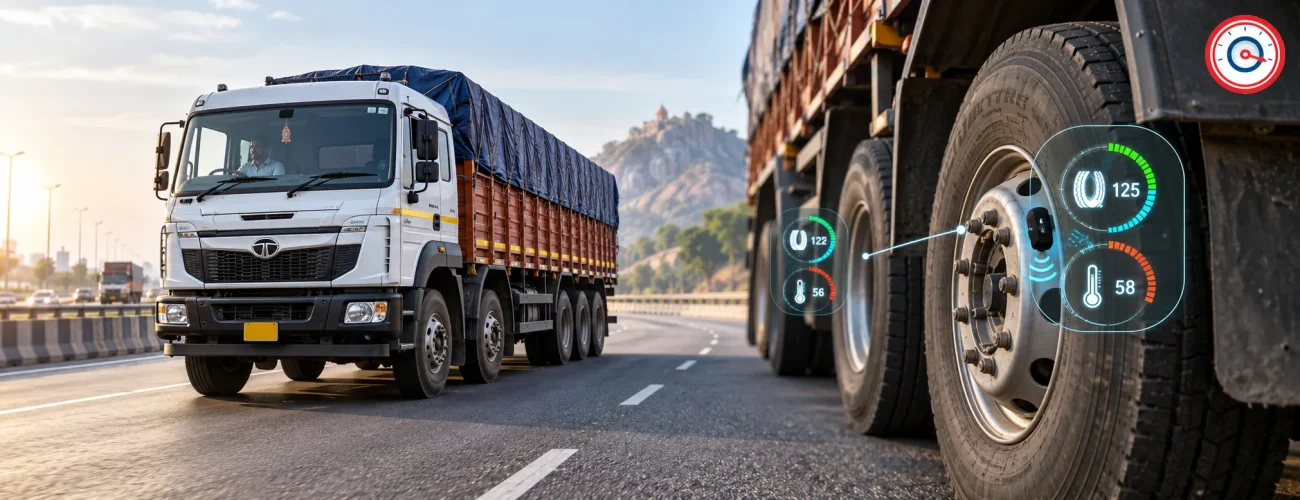
TPMS for commercial fleets in India helps operators monitor tyre pressure and temperature while trucks, buses, tippers and tankers are on the road. This gives fleet managers better visibility into developing tyre issues before they lead to unnecessary wear, fuel waste or unexpected breakdowns.
For Indian fleets, connected tyre monitoring supports safer vehicle operations, better fuel efficiency and more proactive maintenance by helping teams identify abnormal tyre conditions earlier.
What Is TPMS for Commercial Fleets?
TPMS stands for Tyre Pressure Monitoring System.
It uses sensors fitted to individual tyres or wheel positions to monitor pressure and, in many commercial applications, temperature.
The basic process is:
Tyre Sensor → Vehicle Receiver → Telematics Device → Cloud Platform → Fleet Dashboard
The tyre sensor collects the reading.
The vehicle receiver receives the information.
The telematics system can then transmit that data to a remote fleet-management platform.
This gives both the driver and fleet team better visibility into tyre condition while the vehicle is operating.
What Can Commercial TPMS Monitor?
Depending on the hardware and configuration, a commercial vehicle TPMS may provide information such as:
- Tyre pressure
- Tyre temperature
- Low-pressure alerts
- Rapid pressure-loss alerts
- High-temperature alerts
- Individual wheel position
- Sensor status
- Historical pressure trends
When integrated with telematics, the tyre event can also be connected with vehicle information such as location, trip and operating status.
Why Tyre Pressure Matters in Commercial Fleets
Correct tyre pressure is important for more than preventing a flat tyre.
It affects how the tyre carries the vehicle load, contacts the road and performs during long operating hours.
Underinflation Increases Rolling Resistance
An underinflated tyre flexes more as it rotates.
That additional deformation increases rolling resistance, which means the engine must work harder to keep the vehicle moving.
Across a single journey, the difference may appear small.
Across a large fleet operating every day, repeated underinflation can contribute to unnecessary fuel consumption.
For transport companies already managing high diesel expenses, maintaining correct tyre pressure becomes part of overall fuel-efficiency management.
Incorrect Pressure Can Increase Tyre Wear
Tyre pressure also affects tread contact with the road.
When pressure is too low, tyre shoulders may experience greater wear.
When pressure is too high, wear may become concentrated differently across the tread.
Over time, incorrect pressure can shorten the useful service life of a tyre and increase replacement frequency.
For commercial fleets running many wheel positions across multiple vehicles, premature replacement can become a significant operating expense.
Heat Can Indicate a Developing Problem
Pressure and temperature are closely connected in tyre operation.
Heavy loads, long driving hours, road conditions and incorrect pressure can contribute to higher tyre temperatures.
A connected TPMS can help drivers and fleet teams identify abnormal temperature conditions earlier and arrange an inspection before the situation becomes more serious.
Why Manual Tyre Checks Alone Have Limitations
Manual tyre inspections are still essential.
Fleet teams should continue checking pressure, tread condition, sidewalls, valves and visible damage.
The limitation is that manual inspection provides only a snapshot.
Consider a truck that leaves a depot at 7:00 AM after passing a tyre inspection.
Several hours later, one tyre begins losing pressure slowly.
The vehicle may still appear normal to the driver, but it could continue operating with incorrect pressure until the next stop or inspection.
A connected fleet TPMS adds another layer of monitoring.
Manual inspection tells you the tyre condition when you check it.
TPMS helps monitor tyre condition between those checks.
The strongest tyre-maintenance process uses both.
How TPMS and Fleet Telematics Work Together
TPMS becomes more useful for fleet operations when tyre data is connected with vehicle telematics.
1. Tyre Sensors Collect Data
Sensors installed at individual wheel positions measure pressure and, where supported, temperature.
Heavy commercial vehicles may require sensors across several axles and dual-wheel configurations.
2. The Vehicle Receives the Readings
Sensor information is sent wirelessly to an onboard receiver or compatible telematics gateway.
The system identifies the readings associated with each configured wheel position.
3. Telematics Adds Vehicle Context
The tyre information can then be associated with fleet data such as:
- Vehicle identity
- GPS location
- Trip
- Route
- Speed
- Time of event
- Vehicle operating status
This is important because a fleet manager does not only need to know that a pressure problem exists.
They need to know:
Which vehicle? Which tyre? Where is the vehicle? What is it currently doing?
4. Alerts Are Generated
The platform can compare readings with configured thresholds.
Depending on the system, alerts may be generated for conditions such as:
- Low pressure
- Rapid pressure loss
- High temperature
- Abnormal tyre condition
- Sensor communication issues
This helps fleet teams focus on tyres that need attention instead of manually checking every vehicle continuously.
Manual Inspection vs Connected Fleet TPMS
| Area | Manual Tyre Inspection | Connected TPMS |
|---|---|---|
| Pressure visibility | At inspection time | Continuous monitoring |
| Temperature visibility | Usually limited | Can be monitored |
| Slow pressure loss | May be found later | Can trigger an alert |
| Remote monitoring | No | Yes |
| Wheel-level identification | Manual | Can be automated |
| Vehicle location context | No | Can be linked with GPS |
| Historical records | Often manual | Can be stored digitally |
| Driver notification | Manual discovery | Automated alerts possible |
TPMS should therefore support your existing tyre-maintenance process rather than replace it.
How TPMS Can Help Reduce Tyre and Operating Costs
The financial value of TPMS comes from several areas rather than one guaranteed percentage saving.
Helps Protect Tyre Life
Keeping tyres closer to their recommended pressure reduces unnecessary tyre deformation and uneven operating conditions.
That can help reduce avoidable premature wear.
For a fleet with many vehicles, extending tyre usability even modestly can delay replacement purchases and improve tyre lifecycle management.
Helps Control Fuel Waste
Underinflated tyres increase rolling resistance.
This can increase the energy required to move a loaded commercial vehicle.
TPMS helps fleet teams identify vehicles operating outside configured pressure ranges so the issue can be corrected sooner.
The potential fuel benefit will vary according to:
- Vehicle type
- Tyre specification
- Load
- Route
- Driving conditions
- Degree of underinflation
The goal should be to reduce persistent tyre-pressure problems rather than promise a fixed percentage of fuel savings.
Helps Detect Slow Leaks Earlier
A tyre does not need to become completely flat before it becomes an operating problem.
Gradual pressure loss may continue over several hours.
TPMS can identify declining pressure and alert the driver or fleet team when configured limits are crossed.
Earlier inspection may prevent a repairable tyre issue from becoming more serious.
Helps Reduce Tyre-Related Downtime
Tyre problems on the road can affect much more than the tyre itself.
A breakdown can create:
- Delivery delays
- Roadside assistance costs
- Driver waiting time
- Towing expenses
- Vehicle downtime
- Customer-service disruption
TPMS cannot prevent every tyre failure, especially sudden damage caused by road debris or external impact.
However, it can help identify pressure and temperature problems that develop progressively.
Creates Digital Tyre Maintenance Records
Connected tyre monitoring can also provide historical data.
Fleet teams may review:
- Previous pressure alerts
- Temperature trends
- Repeated pressure loss
- Vehicle-level tyre events
- Maintenance history
For example, if one wheel position repeatedly loses pressure, the maintenance team may investigate the valve, rim or other causes instead of repeatedly adding air.
Why TPMS Is Especially Useful for Multi-Axle Vehicles
Heavy commercial vehicles create a more complex tyre-management challenge than small vehicles.
A truck or trailer may have several axles and multiple tyres.
In dual-wheel configurations, a visual inspection may also make inner tyres harder to monitor.
A commercial TPMS can help identify the exact wheel position associated with an alert.
For example:
- Front-left steer tyre
- Rear drive axle
- Inner dual tyre
- Outer dual tyre
- Trailer wheel position
This makes the information more actionable for drivers and maintenance teams.
Instead of searching the entire vehicle, technicians know which tyre requires attention.
TPMS for Logistics and Long-Haul Fleets
Long-distance commercial vehicles may spend many hours away from their depot.
This makes continuous tyre visibility particularly useful.
Fleet teams can use tyre monitoring to support:
- Long highway journeys
- Multi-state transport
- Heavy-load operations
- Trailer fleets
- Scheduled delivery operations
When tyre information is linked with vehicle location, dispatch teams can also understand where the vehicle is when an abnormal condition occurs.
That can help determine whether the driver should stop immediately, visit a nearby service point or continue to a planned inspection location where appropriate.
TPMS for Tippers and Construction Fleets
Construction fleets often operate under demanding conditions.
Vehicles may travel between:
- Construction sites
- Quarries
- Material yards
- Concrete plants
- Highways
- Unpaved access roads
Typical vehicles may include:
- Tipper trucks
- Dump trucks
- Concrete mixers
- Heavy transport vehicles
Heavy loads, uneven surfaces and frequent site movement can place additional stress on tyres.
Connected tyre monitoring can help fleet teams review pressure and temperature conditions alongside GPS vehicle information.
This creates a broader picture of both where the vehicle is operating and how its tyres are performing.
TPMS for Bus and Passenger Fleets
Bus operators often work with fixed routes and tight schedules.
Unexpected tyre-related downtime can disrupt operations and affect passengers.
Connected TPMS can help maintenance teams identify vehicles showing abnormal tyre conditions so they can be prioritized for inspection before the next journey.
For passenger fleets, the system should always complement proper pre-trip inspections and scheduled tyre maintenance.
Can TPMS Reduce Tyre Costs?
TPMS can support lower tyre-related operating costs, but fleets should avoid treating one percentage as a guaranteed saving.
Actual results depend on factors such as:
- Current tyre-maintenance practices
- Annual kilometres travelled
- Vehicle loads
- Road conditions
- Tyre quality
- Driver behaviour
- Existing breakdown frequency
- Response to alerts
- Fuel consumption
- Maintenance discipline
A fleet that currently experiences frequent underinflation may have a larger improvement opportunity than a fleet with an already mature tyre-maintenance program.
The better approach is to measure actual fleet performance.
How to Calculate TPMS ROI
Fleet operators can build a simple business case using their own operational data.
The basic calculation is:
Net TPMS Benefit = Tyre Savings + Fuel Savings + Avoided Downtime − TPMS Cost
Before installation, create a baseline using information such as:
- Annual tyre replacement cost
- Average tyre service life
- Number of tyre-related breakdowns
- Roadside repair expenses
- Annual fleet fuel consumption
- Tyre-related downtime
After implementation, monitor the same figures.
This allows the business to calculate real savings instead of relying on generic industry percentages.
What to Look for in a Commercial Fleet TPMS
Not every fleet needs the same TPMS configuration.
Before selecting a system, fleet managers should consider the following areas.
Pressure and Temperature Monitoring
Monitoring both parameters can provide a more complete picture of tyre condition.
Multi-Axle Compatibility
Ensure the system supports the wheel configuration used by your trucks, buses or trailers.
Clear Wheel Identification
An alert should make it easy to understand which wheel position requires inspection.
Driver Alerts
The driver should receive understandable warnings when tyre conditions cross configured limits.
Remote Fleet Monitoring
For larger fleets, central teams should also be able to view tyre alerts remotely.
Telematics Integration
Connecting tyre data with GPS and vehicle information makes alerts more useful for fleet operations.
Historical Reporting
Stored tyre information can help maintenance teams identify recurring issues and long-term trends.
Hardware Durability
Commercial-vehicle sensors should be suitable for the vibration, dust, water, heat and demanding operating conditions expected in the fleet environment.
Common TPMS Mistakes Fleet Managers Should Avoid
Technology alone does not improve tyre maintenance.
How the system is configured and used matters just as much.
Setting Too Many Alerts
If every small pressure change creates an alert, drivers and fleet managers may begin ignoring notifications.
Thresholds should reflect tyre specifications and operational requirements.
Ignoring Repeated Alerts
Repeated pressure loss from the same wheel position may indicate an underlying mechanical problem.
Simply reinflating the tyre each time may not solve the cause.
Treating All Vehicles the Same
A long-haul truck, city bus and construction tipper operate under different conditions.
Pressure targets, alert logic and maintenance processes should match the vehicle application and tyre manufacturer’s recommendations.
Replacing Physical Inspections with Technology
TPMS cannot visually inspect:
- Tread depth
- Sidewall cuts
- Embedded objects
- Wheel damage
- Alignment problems
- Physical tyre condition
Fleet teams should continue scheduled manual inspections.
How TPMS Fits Into Preventive Fleet Maintenance
TPMS should be viewed as one part of a wider preventive-maintenance strategy.
Tyre information becomes even more useful when combined with other fleet data.
Fleet managers may review:
- Vehicle mileage
- Engine hours
- Trip history
- Driver behaviour
- Fuel consumption
- Tyre alerts
- Maintenance schedules
This helps move maintenance away from purely reactive repairs.
Instead of waiting for a tyre to fail, the fleet team can use operating information to identify vehicles that require attention.
How Diselmap Supports Connected Tyre Monitoring
Diselmap helps fleet operators connect tyre monitoring with broader vehicle and fleet visibility.
Depending on fleet requirements and compatible hardware, connected tyre monitoring can support:
- Tyre pressure monitoring
- Temperature monitoring
- Vehicle-level alerts
- GPS location context
- Commercial fleet monitoring
- Historical tyre information
- Preventive maintenance
- Fleet safety
This allows tyre information to become part of the overall fleet-management process rather than remaining an isolated manual activity.
For businesses that need a dedicated system, the Diselmap Tyre Pressure Monitoring System page provides details about available TPMS solutions for commercial fleet applications.
Frequently Asked Questions
What is TPMS for commercial vehicles?
TPMS is a tyre-monitoring system that uses sensors to measure tyre pressure and, depending on the system, tyre temperature. In connected fleet applications, this information can also be transmitted to a central telematics platform.
Can TPMS detect a slow tyre leak?
TPMS can identify declining tyre pressure and generate an alert when readings move outside configured limits, helping fleet teams investigate possible leaks earlier.
Does TPMS help improve fuel efficiency?
Correct tyre pressure helps reduce unnecessary rolling resistance. Preventing persistent underinflation can therefore support better fuel efficiency, although the actual benefit varies between fleets and operating conditions.
Can TPMS prevent every tyre blowout?
No. TPMS cannot prevent every failure caused by sudden impact, road debris, cuts or other unexpected tyre damage. It can help provide earlier warning of developing pressure or temperature problems.
Is TPMS useful for multi-axle trucks?
Yes. Commercial systems can support multiple wheel positions, making them useful for trucks, trailers, buses and other multi-axle vehicles.
Can TPMS integrate with fleet telematics?
Yes. Compatible systems can send tyre information through a telematics gateway to a central fleet platform, allowing tyre alerts to be viewed alongside vehicle and location information.
Does TPMS replace manual tyre inspections?
No. Manual inspection remains necessary for tread wear, physical damage, alignment issues, embedded objects and other conditions sensors cannot fully assess.
Is TPMS useful for construction fleets?
Yes. Tippers, dump trucks, concrete mixers and other commercial construction vehicles can benefit from tyre pressure and temperature monitoring, particularly when operating under heavy loads and demanding road conditions.
Conclusion: Move from Reactive to Proactive Tyre Management
Tyre maintenance becomes more effective when fleet teams can identify developing problems before they turn into roadside failures.
Manual inspections remain essential, but they only provide tyre information at specific points in time.
Connected TPMS adds continuous tyre pressure and temperature visibility while commercial vehicles are operating.
When tyre information is integrated with telematics, fleet managers can also understand which vehicle is affected, where it is located and when the abnormal condition occurred.
For commercial fleets in India, this can support better tyre maintenance, reduced avoidable tyre wear, improved fuel management and fewer tyre-related operational disruptions.
Monitor Commercial Fleet Tyres with Diselmap
Diselmap helps commercial fleet operators bring tyre monitoring into a connected fleet-management environment.
With compatible TPMS hardware and telematics integration, fleet teams can monitor tyre conditions, receive alerts and review tyre information alongside broader vehicle activity.
Explore Diselmap TPMS Solutions to find the right tyre-monitoring setup for your trucks, buses, tippers and commercial fleet.