
- Track driving habits, prevent risks, and build a safer, more efficient fleet.
Driver Behavior Monitoring System for Commercial Fleets in India
Diselmap helps commercial fleets monitor and analyse driver behaviour using GPS, telematics and connected
vehicle data. Track events such as speeding, harsh braking, rapid acceleration, sharp cornering and excessive
idling to identify recurring risk patterns and improve driver performance.
Fleet managers can review real-time alerts, trip-level events, driver scorecards and historical performance trends
from a centralized platform, helping teams make more informed coaching, safety and operational decisions.
Real-Time Driver Insights
Monitor selected driving events as they occur and review them alongside trip and vehicle context.
Driver Performance Scorecards
Compare driver event patterns and performance trends across trips and time periods.
Actionable Alerts & Reports
Receive configured event alerts and use structured reports to support reviews and coaching.
Connected Fleet Context
Combine driver behaviour with GPS, telematics and compatible vehicle data for better operational context.
- DRIVER MONITORING
What Is Driver Behavior Monitoring?
Driver Behavior Monitoring is the process of tracking how fleet vehicles are being driven and turning selected driving events into information that managers can review. Depending on the installed hardware and data available,
a system can monitor speed, braking, acceleration, cornering, idling and other operational events. The value comes from context. Instead of viewing a single event in isolation, fleet teams can review the driver, trip, route, time and historical pattern behind it. This makes it easier to distinguish occasional exceptions from repeated behaviour that may need coaching or operational attention. For broader road-safety context, official guidance from India’s Ministry of Road Transport & Highways and the World Health Organization highlights speeding, distraction and other road-user behaviours as important safety considerations.
Complete Driver Behavior Monitoring for Safer Fleet Operations
- Real-Time Driver Monitoring
- Speed & Overspeed Monitoring
- Harsh Driving Event Detection
- Driver Performance Scorecards
- Driver Behaviour Analytics
- Instant Alerts & Notifications
- Trip History & Behavior Reports
- GPS & Telematics Integration
- DRIVER RISK MONITORING
Risky Driving Behaviors Fleet Managers Need to Monitor
Commercial fleets operate across different roads, routes and working conditions. Monitoring recurring driving events helps fleet managers identify patterns that may affect safety, fuel use, vehicle condition and day-to-day operational consistency.
Speeding
Monitor overspeed events across vehicles, trips and drivers. Review where and when events occur, then use
historical patterns to support driver discussions and performance reviews
Harsh Braking
Detect sudden braking events and review them alongside trip and route context. Repeated harsh braking can
indicate reactive driving, difficult routes or driving habits that need closer attention
Rapid Acceleration
Track sudden acceleration events that may contribute to unnecessary fuel use and vehicle wear. Compare event
patterns across drivers and operating periods to encourage smoother driving.
Excessive Idling
Track how long vehicles remain stationary with the engine running. Use idling reports to identify recurring driver,
route or location patterns that may be worth addressing.
Sharp Cornering
Monitor aggressive or high-force cornering events and review recurring patterns across routes and drivers. This is particularly useful where vehicle stability or load movement is an operational concern
Distracted & Fatigued Driving
When integrated with compatible AI dashcams or driver-monitoring systems, fleets can extend monitoring to
selected distraction and fatigue-related events. Camera-based information should be treated as an additional data
source rather than a capability of GPS or telematics alone.
- CORE CAPABILITIES
Driver Behavior Monitoring Features
Real-Time Driving Event Monitoring
Capture selected speeding, braking, acceleration, cornering and idling events from connected fleet systems.
Configurable Alerts
Notify fleet teams when configured driver-behaviour thresholds or selected events occur.
Driver Performance Scorecards
Summarise selected driver events and trends into a structured performance view for comparison and follow-up.
Trip-Level Behaviour History
Review driving events against individual trips, routes, timestamps and operating periods.
Historical Performance Trends
Track changes over time instead of relying only on individual incidents or real-time alerts.
Driver & Fleet Reports
Generate structured reports to review driver event frequency, trends and fleet-wide behaviour patterns.
GPS & Telematics Context
Combine driver events with location, route and trip data to understand where and when events occurred.
Centralized Dashboard
Review selected driver events, scorecards, alerts and reports from a single fleet interface.
- BUSINESS BENEFITS
Benefits of Driver Behavior Monitoring
Driver behaviour data is most useful when it supports practical decisions rather than simply generating alerts. Structured monitoring can help fleet teams identify recurring issues, focus coaching and compare changes in performance over time.
Improve Driver Safety
Identify recurring patterns such as speeding, harsh braking, rapid acceleration and sharp cornering to support safer driving practices
Increase Driver Accountability
Associate selected driving events with trips or identified drivers to create clearer records for performance reviews and coaching
Reduce Avoidable Fuel Waste
Identify excessive idling, speeding and aggressive driving patterns that may contribute to unnecessary fuel consumption.
Reduce Vehicle Wear
Encourage smoother driving behaviour that can help limit unnecessary stress on brakes, tyres and other vehicle components.
Support Driver Coaching
Use scorecards, event history and trends to focus feedback on specific behaviours rather than relying on general observations.
Improve Fleet Decision-Making
Combine driver behaviour with trip and vehicle information to support more informed operational and safety decisions
- INDUSTRY APPLICATIONS
Driver Behavior Monitoring for Different Fleet Operations
Driver behavior monitoring solutions tailored for diverse fleet operations.
Every industry has different driver safety and fleet performance challenges. Diselmap’s Driver Behavior Monitoring Solution helps businesses identify risky driving patterns, improve driver accountability, reduce operational risks, and support safer fleet operations through real-time monitoring and intelligent analytics.
Logistics & Transportation
Monitor speeding, harsh driving, idling and driver performance across long-haul, delivery and transport fleets. Use
trip-level data to improve accountability and support more consistent driving practices.
Construction & Mining
Track driving behaviour across heavy vehicles and site fleets operating in demanding environments. Review risk
patterns that may affect operator safety, vehicle control and asset condition.
Manufacturing & Distribution
Monitor drivers involved in plant, warehouse and distribution operations. Use behaviour and trip data to improve
consistency across regular routes and facility movements.
Oil & Gas
Review driver behaviour across tankers, service vehicles and field fleets. Track speed, braking, acceleration and
trip history to support safer operating practices in demanding environments
Fleet Rental & Leasing
Monitor how vehicles are driven across different users and locations. Use trip and behaviour data to improve
accountability and protect fleet assets over the vehicle lifecycle.
- How It Works
How Diselmap Driver Behavior Monitoring Works
Diselmap uses GPS, telematics and compatible connected vehicle data to capture selected driving events and organize them into alerts, trip history, scorecards and performance reports. Fleet managers can then review behaviour in context and use the information for coaching and operational follow-up.
01. Capture Driving Data
Connected GPS trackers, telematics devices and compatible vehicle systems collect selected vehicle and trip information during operation.
02. Detect Driving Events
Configured parameters identify events such as speeding, harsh braking, rapid acceleration, sharp cornering and excessive idling.
03. Review Driver Performance
Fleet managers review event frequency, trip history, alerts, scorecards and performance trends to identify recurring patterns.
04. Coach & Improve
Use the available data to discuss specific behaviours, set improvement goals and monitor whether performance changes over time.
- DRIVER PERFORMANCE
Driver Scorecards & Performance Reports
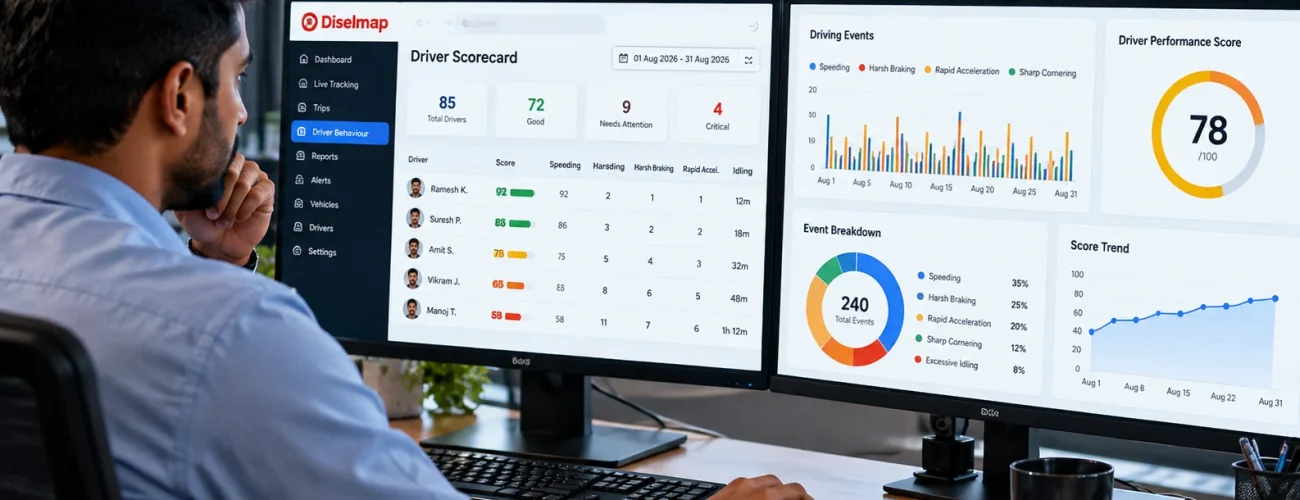
Diselmap Driver Scorecards help fleet managers evaluate driver behaviour using structured performance data collected from connected fleet systems. Instead of relying on isolated incidents, managers can review patterns across multiple trips and time periods to understand how individual drivers are performing. A scorecard can bring together selected driving events such as speeding, harsh braking, rapid acceleration, sharp cornering and excessive idling.
By reviewing event frequency, trip history and performance trends, fleet teams can identify recurring risk patterns and compare driver behaviour more consistently. Performance reports can also support driver coaching and review programmes. Managers can use historical data to discuss specific events, track improvement over time and focus training on areas that need attention.
Recommended Scorecard Metrics
- Overall Driver Performance Score
- Speeding Event Count
- Harsh Braking Frequency
- Rapid Acceleration Events
- Sharp Cornering Events
- Safety Event Frequency
- Trip-Level Driver Score
- Historical Performance Trend
- Driver-to-Driver Comparison
- Coaching Improvement Progress
- DRIVER COACHING
Turn Driver Data into Coaching & Action
Monitoring is most valuable when the information leads to practical action. Driver event history, scorecards and performance trends can help fleet managers move from general observations to more focused coaching conversations.
Detect
Identify recurring driving events, unsafe behaviour patterns and performance exceptions across trips and drivers. Use real-time and historical data to highlight issues that may require attention.
Review
Assess trip history, driver scorecards, event frequency and historical trends to understand the context behind recurring behaviour. This helps managers determine which issues need coaching, follow-up or further investigation.
Coach
Use specific driving events and performance data to provide targeted feedback. Discuss real examples such as speeding, harsh braking or excessive idling so coaching is practical and measurable.
Compare
Measure driver performance across trips, time periods and fleet groups. Identify drivers who are improving as well as those showing repeated patterns that need continued attention.
Improve
Track performance changes over time and reinforce safer, more consistent driving practices. Updated scorecards and reports help teams evaluate whether coaching efforts are having the intended effect.
- CONNECTED TECHNOLOGIES
Connected Driver Monitoring Technologies
Driver behaviour becomes more useful when it is interpreted alongside other fleet data. Depending on the deployment, GPS, telematics, camera systems, CAN Bus data and fleet management tools can add location, trip, vehicle and visual context to driver events.
Adds location, speed, route and trip context to driver events, helping managers understand where and when behaviour occurred.
Provides driving and vehicle data that can support monitoring of speed, braking, acceleration, idling and other performance indicators.
Compatible camera systems can provide visual context for selected safety events, including distraction, fatigue and
incident review
Where supported, CAN Bus data can add vehicle and engine information such as RPM, fuel use and diagnostic
context to driver analysis.
Brings driver events, trip history, vehicle status, alerts and operational reports together in a broader fleetmanagement workflow.
- WHY DISELMAP
Built for Practical Driver Performance Management
Diselmap combines connected fleet data, driver insights and performance-monitoring tools to help businesses manage driver behaviour more consistently across day-to-day fleet operations.The focus is on making driver-event information easier to review, compare and act on.
- Centralized Driver Monitoring
- Real-Time Driving Event Alerts
- Driver Scorecards & Reports
- GPS & Telematics Integration
- Historical Performance Tracking
- Driver Coaching Support
- Flexible Fleet Deployment
- Ongoing Technical Support
- FREQUENTLY ASKED QUESTIONS
Frequently Asked Questions About Driver Behavior Monitoring
The Diselmap Driver Behavior Monitoring FAQs
What is a Driver Behavior Monitoring System?
A Driver Behavior Monitoring System tracks selected driving events and performance patterns using connected fleet data.Depending on the setup, it can monitor speed, braking, acceleration, cornering, idling and other events, then present the information through alerts, trip history, scorecards and reports.
What driver behaviours can be monitored using telematics?
Common telematics-based events can include speeding, harsh braking, rapid acceleration, sharp cornering and excessive idling.Available events depend on the installed device, vehicle compatibility and system configuration.
How are driver performance scores calculated?
Driver scores are typically based on selected event types, event frequency, configured thresholds, trip activity and the scoring logic used by the platform.The exact methodology should be documented for the fleet so managers and drivers understand how scores are produced.
Can fleet managers receive real-time driver alerts?
Yes, selected driving events can trigger alerts when configured thresholds are met. Alert availability depends on the connected hardware, data source and platform configuration.
Can driver monitoring help identify excessive idling?
Yes. Where idling data is available, managers can review idle duration and recurring patterns by vehicle, driver,route or location to identify behaviour that may need operational follow-up
Does driver behavior monitoring integrate with GPS tracking?
Yes. GPS data can add vehicle location, speed, route and trip context to driver events, making it easier to review when and where a behaviour occurred.
Can AI dashcams detect driver distraction or fatigue?
Compatible driver-monitoring cameras can support selected distraction and fatigue detection. These are camerabased capabilities and should not be presented as functions of GPS or telematics alone
How can driver scorecards support coaching?
Scorecards help managers review recurring patterns across trips and time periods. They can be used to identify specific behaviours, discuss real examples with drivers and track whether performance changes after coaching
- IMPROVE DRIVER PERFORMANCE
Improve Driver Performance with Diselmap
Monitor driving behaviour, review performance trends and turn connected fleet data into practical insights with Diselmap Driver Behavior Monitoring. Configure the solution around your fleet size, vehicle types and operational requirements