
- FUEL LEVEL MONITORING HARDWARE
Fuel Level Sensor for Commercial Vehicles & Equipment in India
Diselmap helps commercial fleets monitor fuel levels using compatible fuel level sensors connected to GPS, telematics and fleet monitoring systems. Track tank-level changes, refuelling activity and significant fuel drops across supported vehicles, equipment and generators, with historical data available for operational review.
• Tank-Level Visibility
• Refuelling Activity Monitoring
• Significant Fuel-Drop Alerts
• Vehicle & Equipment Integration
Tank-Level Visibility
Review current fuel-level information across compatible vehicles, equipment, generators, and tanks.
Refuelling Activity Monitoring
Review significant fuel-level increases that may correspond to refuelling events.
Fuel-Level Change Alerts
Identify unusual or significant fuel-level changes that may require operational review.
Connected Fleet Integration
Connect compatible fuel-level sensor data with GPS, telematics, and fleet-monitoring systems.
Explore Our Intelligent Fuel Level Monitoring Technology
Explore Diselmap’s advanced Fuel Level Sensor solutions designed to provide real-time fuel monitoring, accurate fuel measurement, intelligent alerts, and complete fuel visibility across vehicles, equipment, generators, and storage tanks.
Our Fleet Technology Services
Contact Details
+91 9833441444
sales@diselmap.com
CBD Belapur, Navi Mumbai
- FUEL LEVEL SENSOR
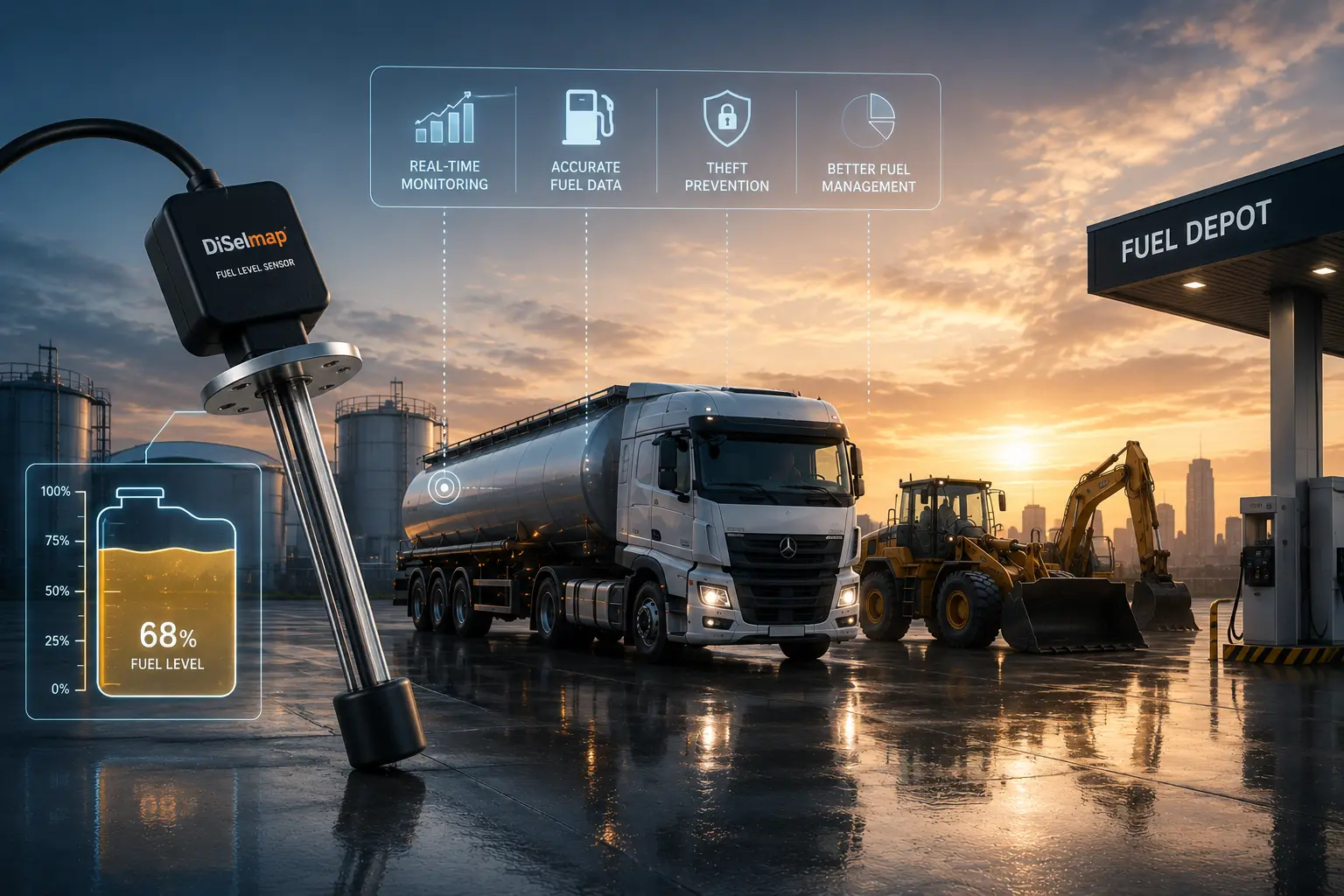
What Is a Fuel Level Sensor?
A fuel level sensor is a device that measures the amount or level of fuel inside a tank and converts that
measurement into an electrical or digital signal that can be displayed, recorded or transmitted to another
system.
In many factory-built vehicles, the fuel level sensor forms part of a fuel sending unit that supplies information
to the dashboard fuel gauge. In commercial fleet monitoring, a dedicated sensor may also be installed to
provide fuel-level data to a GPS tracker, telematics device or connected monitoring platform.
Depending on the sensor, tank and system configuration, fleet teams may be able to review current tank
level, refuelling activity, significant level changes and historical fuel trends.
Quick answer
A fuel level sensor measures fuel inside a tank. In a connected fleet setup, the sensor data can be transmitted through compatible GPS or telematics hardware so managers can review fuel-level changes
and historical trends remotely.
How a Fuel Level Sensor Works
The exact working principle depends on the sensor technology, but a connected fleet deployment usually
follows the same basic process.
1. Measure the Fuel Level
The sensor detects the level or position of fuel inside the tank using its measurement method, such as float-based sensing, capacitance, magnetic sensing or another compatible measurement technology.
2. Convert the Measurement into a Signal
The measurement is converted into an electrical or digital output that represents the tank level. The exact signal depends on the selected sensor and interface.
3. Send Data to Connected Hardware
In a fleet-monitoring setup, compatible GPS or telematics hardware can receive the sensor output and transmit selected fuel information to the monitoring platform.
4. Review Fuel Information
Fleet managers can review current readings, refuelling events, significant fuel-level changes and historical trends. The available information depends on the installed hardware, calibration and platform configuration
- SENSOR TECHNOLOGY
Common Fuel-Level Sensor Technologies
Fuel level can be measured in different ways. The right technology depends on the tank, vehicle, required output, installation environment and monitoring objective. The technologies below are common in the wider market; they should not be interpreted as a claim that every type is available for every Diselmap deployment.
Float / Resistive Fuel Level Sensors
A float moves with the fuel surface and changes the position of a resistive or magnetic sensing element. This approach is widely used in vehicle fuel gauges and fuel sending units.
Capacitive Fuel Level Sensors
Capacitive sensors measure changes in electrical capacitance as the fuel level changes along the sensing probe. They are commonly used in aftermarket fleet and equipment monitoring where continuous tank-level
data is required.
Ultrasonic / Contactless Level Sensors
Some systems use ultrasonic measurement from outside or above the tank. Suitability depends on tank material, mounting position, operating conditions, fuel type and the selected sensor specification.
Magnetic / Hall-Based Fuel Level Sensing
Magnetic and Hall-effect designs can measure float position without the same type of sliding electrical contact used in traditional resistive systems. These designs are common in some automotive fuel-level applications.
Sensor Output & Communication Interfaces
Terms such as digital, CAN, RS232, RS485, Bluetooth or wireless describe how sensor data is communicated; they are not necessarily separate fuel-measurement principles. Always confirm both the sensing method and the output interface when checking compatibility.
- FUEL EVENTS
Fuel Events You Can Monitor
Once the sensor is correctly installed and calibrated, fuel-level data can be used to review several operational events. The exact events available depend on the selected sensor, connected hardware and software rules.
Current Fuel Level
Review the latest available tank-level reading for supported vehicles or equipment instead of relying only on manual checks.
Refuelling Activity
A significant increase in recorded tank level may correspond to refuelling. Managers can review the time, vehicle and available location context before reconciling the event with operating records
Significant Fuel-Level Drops
A sudden or unusual decrease can be flagged for investigation. It should not automatically be treated as proof of fuel theft because consumption, vehicle movement, tank geometry, leakage, sensor behaviour or calibration can also affect readings
Low Fuel Conditions
Configured thresholds can help teams identify vehicles or equipment approaching a selected low-fuel level,
where the deployment supports this function.
Historical Fuel Trends
Historical records make it easier to review patterns over time and compare fuel activity with trips, operating periods or equipment usage.
For a broader explanation of how sensor data fits into fleet fuel workflows, read Fuel Management for Fleets:
Complete Guide to Fuel Monitoring & Cost Control.
- INSTALLATION & ACCURACY
Installation & Calibration: What Affects Fuel-Level Accuracy?
Fuel-level accuracy is not determined by the sensor alone. Tank shape, installation, calibration, wiring, vehicle movement and data processing can all affect the quality of the final reading
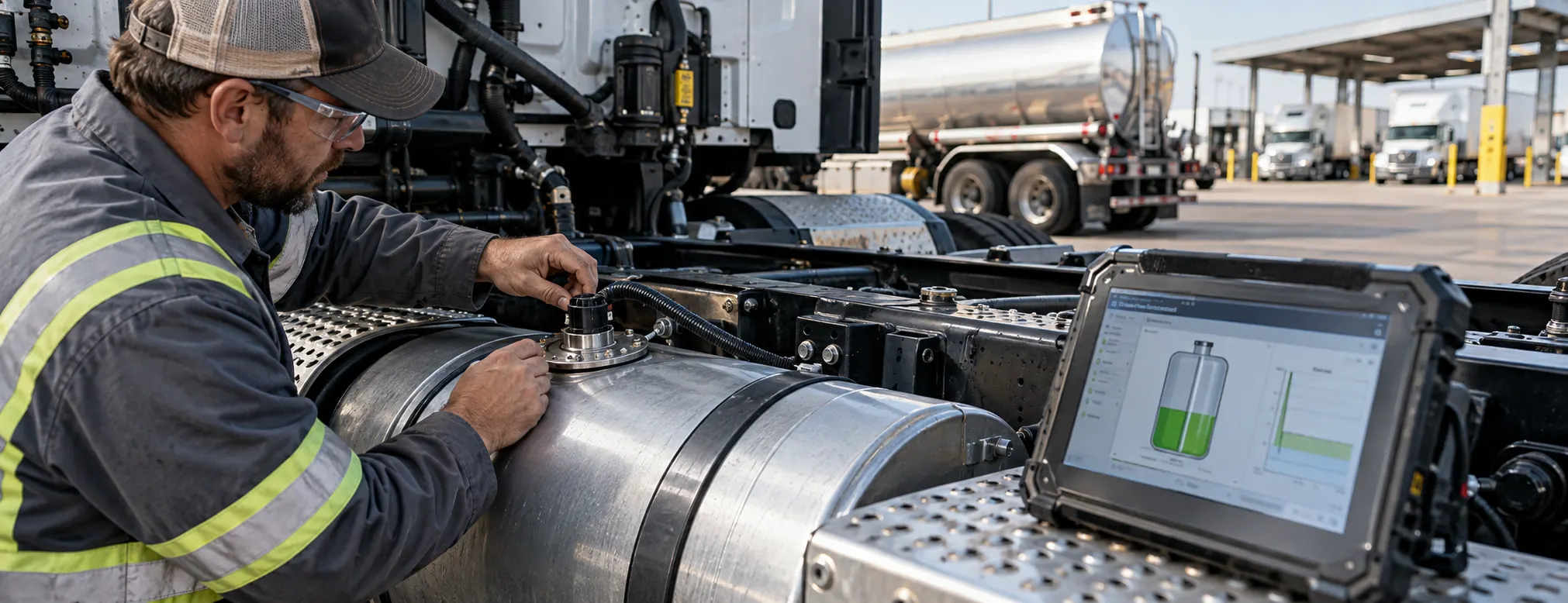
Tank Compatibility
The sensor must be suitable for the tank material, depth, geometry, fuel type and installation environment.
Irregular tanks may require more detailed calibration than simple rectangular tanks
Sensor Placement
Placement should allow the sensor to measure the usable fuel range while avoiding obstructions and
installation points that create unreliable readings
Tank Calibration
Calibration maps the sensor output to the actual tank level or volume. This is especially important when tank geometry is non-linear or when accurate event interpretation is required.
Fuel Movement and Sloshing
Acceleration, braking, cornering, vibration and uneven surfaces can cause the fuel surface to move. Filtering and historical interpretation help reduce the risk of treating short-term movement as a real fuel event.
Electrical and Data Compatibility
The sensor output must be compatible with the connected GPS, telematics or gateway hardware. Power supply, input type, communication protocol and configuration should be checked before installation
- APPLICATIONS
Industry-Specific Fuel Monitoring Solutions
Fuel Level Sensor Applications
Connected fuel-level monitoring can be useful across several commercial vehicle and equipment
environments when compatible hardware is available.
Commercial Trucks & Buses
Monitor vehicle tank-level changes, refuelling activity and historical fuel data across transport, logistics and passenger fleets.
Construction & Mining Equipment
Track fuel levels on compatible excavators, loaders, tippers, site vehicles and other heavy equipment where manual checks may be difficult or inconsistent.
Monitor compatible diesel generator tanks and other stationary or semi-mobile equipment where regular physical inspection may be time-consuming.
Use tank-level data to support fuel visibility across compatible machinery and operational equipment in industrial or remote environments.
Fuel-level sensors can provide vehicle or equipment fuel data within a broader monitoring workflow. For industry-specific context, see Oil & Gas Fleet Management Solutions and, once published, Fuel Monitoring
for Oil & Gas Fleets.
- PRODUCT BOUNDARIES
Fuel Level Sensor vs Fuel Management System
A fuel level sensor and a fuel management system work together, but they are not the same product. Keeping this distinction clear helps users understand what each layer does
| Fuel Level Sensor | Fuel Management System |
|---|---|
| Physical measurement hardware | Software / platform layer |
| Measures or detects tank-level information | Organizes, reports and analyses fuel information |
| Installed on or connected to a compatible tank / vehicle | Used by fleet teams through a dashboard or application |
| Produces source fuel-level data | Combines data into trends, alerts, reports and workflows |
| Measurement quality depends on sensor type, installation and calibration | Insight quality depends on the data received and system configuration |
An OEM fuel sending unit is another related term. It is typically the factory assembly that senses tank level and supplies information to the vehicle fuel gauge. A fleet fuel level sensor may be a separate monitoring device depending on the vehicle and use case. For software, analytics and fleet-wide fuel workflows, visit the Diselmap Fuel Management System
- CONNECTED FLEET DATA
Integrating Fuel-Level Data with GPS & Telematics
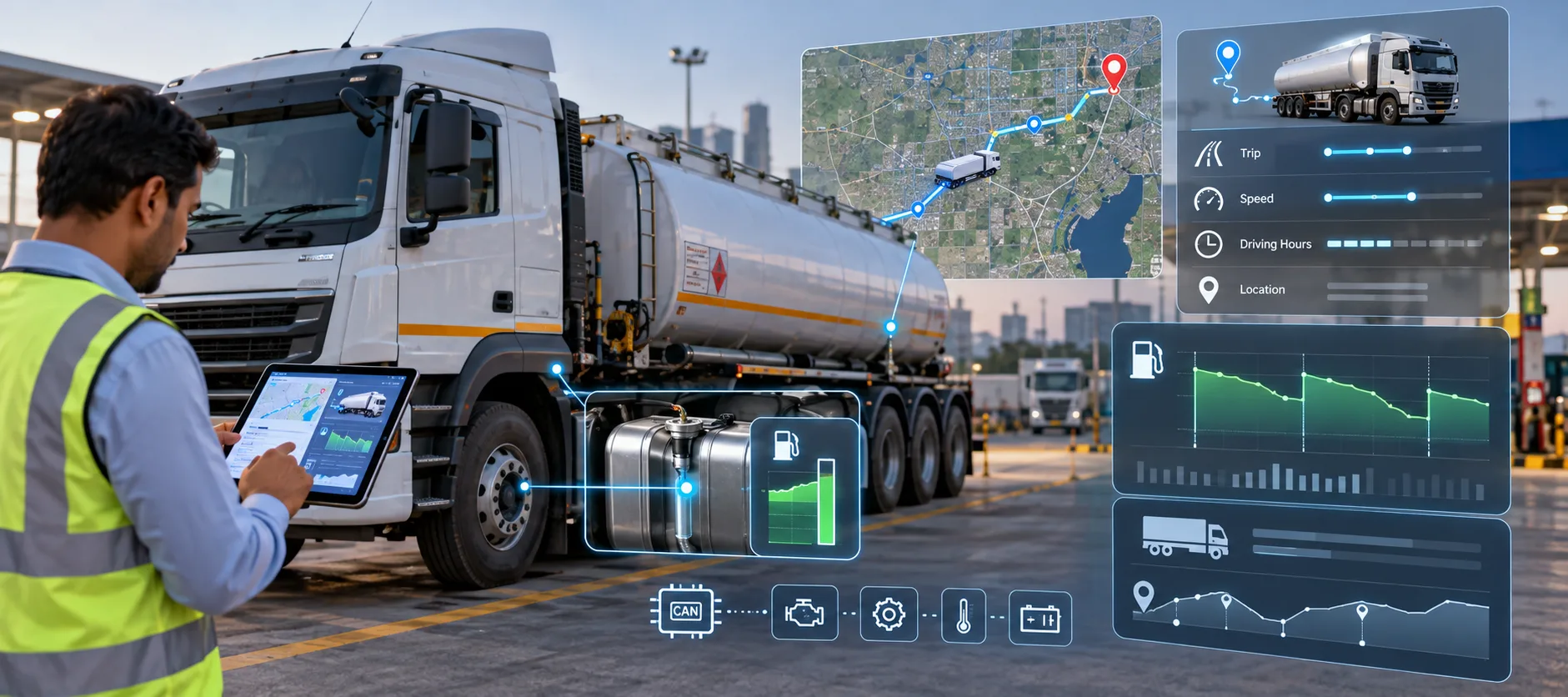
Fuel data becomes more useful when it can be reviewed alongside vehicle location, trip activity and other operational information. Each technology has a different role.
• Fuel level sensor – measures tank-level information.
• GPS tracking – adds location, route, stop and trip context.
• Vehicle telematics – connects selected vehicle and operational data to the fleet platform.
• CAN Bus integration – can provide supported vehicle or engine data where compatible; it is not a replacement for a dedicated tank sensor in every use case.
Example: if a significant fuel-level drop is recorded, GPS data may show where the vehicle was at that time. Trip history can help the fleet team review the event in context before deciding whether further investigation
is required.
Related Diselmap solutions: GPS Tracking System | Telematics Solutions | CAN Bus Systems
For a practical transport example, read Oil Tanker Tracking System: How GPS Improves Fleet Visibility.
- BUSINESS BENEFITS
Benefits of Fuel-Level Monitoring
The value of a connected sensor comes from giving fleet teams better information about tank-level activity. Benefits depend on how the data is used within the operation.
Improve Fuel Visibility
Review tank-level information across compatible vehicles and equipment instead of relying only on manual readings
Review Refuelling Activity
Use recorded level increases, time and available location context to support refuelling review and reconciliation
Identify Significant Fuel Changes
Flag unusual changes for investigation without assuming every change represents theft or misuse.
Reduce Manual Tank Checks
Use connected readings to reduce dependence on repeated physical checks where remote monitoring is suitable.
Support Fuel Planning
Historical tank-level information can support planning for refuelling and vehicle or equipment availability.
Maintain Historical Records
Review past fuel-level activity and compare events with trips, locations or operating periods.
- WHY DISELMAP
Built Around Practical Fuel-Level Monitoring
Diselmap can help businesses evaluate fuel-level monitoring as part of a connected fleet deployment. The right setup should begin with the actual tank, vehicle, equipment type, operating environment, and monitoring requirement rather than a generic hardware choice. Factors such as tank shape and depth, fuel type, sensor compatibility, installation location, calibration requirements, available power and communication interfaces, and integration with GPS or telematics hardware can all influence the final setup.
A suitable deployment should also consider what the business needs to monitor in practice, such as current tank level, refuelling activity, significant fuel-level changes, low-fuel conditions, or historical fuel trends. Diselmap can help assess these requirements and identify a compatible monitoring approach that fits the vehicle, equipment, or application while supporting connected fuel visibility through the broader fleet ecosystem.
Vehicle & Tank Compatibility Review
Assess tank dimensions, shape, fuel type, vehicle or equipment configuration, and operating conditions before selecting a monitoring setup. A compatibility review helps identify suitable sensor options and reduces the risk of installation or data-quality issues later.
GPS & Telematics Integration
Connect compatible fuel-level information with existing GPS, telematics, or fleet monitoring technology. This allows tank-level data to be reviewed alongside location, trip, stop, route, and selected operational information for better context.
Installation & Calibration Planning
Plan sensor placement, mounting, tank geometry, wiring, power requirements, communication interface, and calibration before deployment. Proper installation and calibration can improve the consistency and usefulness of recorded fuel-level information.
Centralised Monitoring
Review fuel-level information from supported vehicles, equipment, generators, and other connected assets through a central monitoring system. This can help fleet teams compare activity, review events, and maintain better visibility across multiple assets.
Scalable Fleet Deployment
Extend fuel-level monitoring across additional compatible vehicles, equipment, and operating locations as fleet requirements grow. A scalable approach helps businesses expand monitoring without changing the overall connected fleet workflow.
Configuration & Technical Support
Support system configuration, integration, calibration, and operational setup where included in the selected deployment. Technical assistance can help ensure connected hardware, communication settings, alerts, and monitoring features are configured for the intended use case.
- Frequently Asked Questions
Frequently Asked Questions About Fuel Level Sensors
Find answers to common questions about fuel level sensors, including how they work, installation, accuracy, refuelling monitoring, GPS integration, compatible vehicles and equipment, and factors that can affect fuel-level readings.
What is a fuel level sensor?
A fuel level sensor measures the level or amount of fuel inside a tank and converts the measurement into a signal that can be displayed or transmitted. In fleet applications, the data may be sent through GPS or telematics hardware to a remote monitoring platform.
How does a fuel level sensor work?
The working principle depends on the technology. Float/resistive systems measure float position, capacitive sensors measure changes in capacitance, and other designs may use ultrasonic or magnetic sensing. The resulting signal is then interpreted as fuel level.
Where is a fuel level sensor located?
In factory vehicles, the sensor is often located inside the fuel tank as part of the fuel sending unit. Aftermarket fleet sensors may be installed in, on or around the tank depending on the technology and approved installation method.
How accurate is a fuel level sensor?
Accuracy depends on the sensor specification, tank geometry, installation, calibration, fuel movement and operating conditions. The correct accuracy figure should be taken from the selected hardware specification and validated for the deployment.
Can a fuel level sensor detect fuel theft?
A connected system can identify significant or unusual fuel-level decreases that may require investigation. A
sudden drop is not proof of theft by itself; managers should review location, trip history, consumption, sensor
behaviour and other available context.
Can a fuel level sensor monitor refuelling?
A significant increase in recorded tank level may be interpreted as a refuelling event when the sensor and software are correctly configured. Detection quality depends on calibration, tank shape, sensor resolution and event rules.
What can cause unreliable or jumping fuel readings?
Possible causes include wiring or power issues, poor installation, incorrect calibration, tank geometry, fuel sloshing, sensor faults, communication issues or a mismatch between the sensor and connected hardware. Repeated implausible readings should be checked rather than assumed to be real fuel events.
Can a fuel level sensor work with a GPS tracker?
Yes, when the GPS or telematics device supports the sensor output or communication interface. Compatibility should be checked for voltage, input type, protocol and configuration before installation.
Can fuel level sensors be used on generators and heavy equipment?
They can be used on compatible generators, construction equipment and other fuel-dependent assets when the tank, fuel type, sensor technology, power supply and communication setup are suitable.
What affects fuel level sensor price?
Cost depends on the sensor technology, tank size, probe length or mounting requirements, output interface, installation, calibration, connected hardware, quantity and platform integration. A compatibility assessment is more useful than relying on one generic price for every fleet.
- IMPROVE FUEL VISIBILITY
Improve Fuel-Level Visibility with Diselmap
Talk to Diselmap to evaluate tank compatibility, compatible sensor configurations, installation approach, calibration and integration with your existing fleet monitoring setup.