
- FUEL VISIBILITY THAT GOES BEYOND BASIC TRACKING
Fuel Management System for Complete Fleet Fuel Visibility & Control
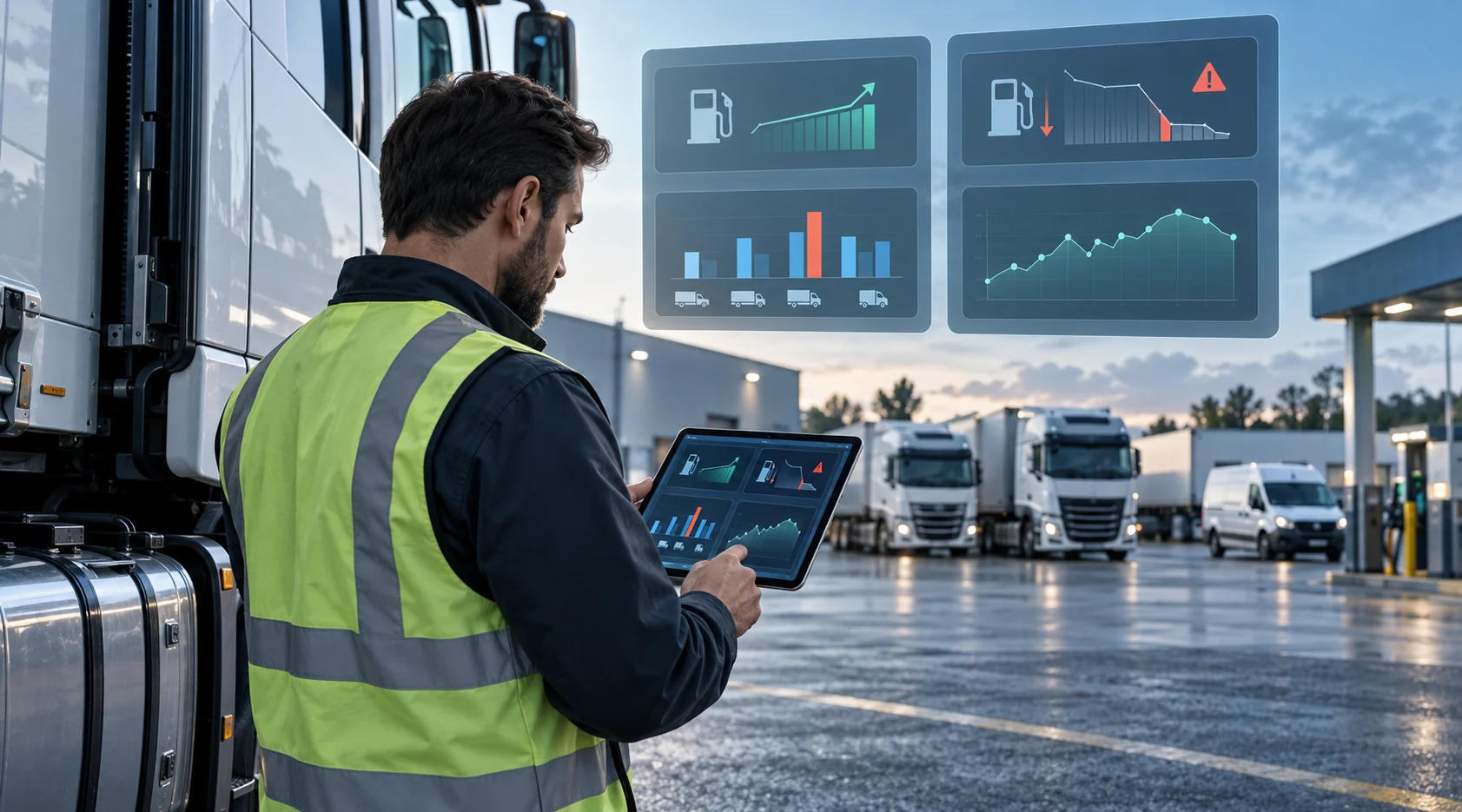
Monitor fuel levels, consumption, refuelling activity, unexpected fuel drops and historical trends across connected vehicles and equipment with Diselmap’s intelligent Fuel Management System.
Fuel Monitoring & Analytics
View current fuel levels and changes across connected vehicles and equipment.
Fuel Theft Detection
Identify when fuel is added or when an unexpected reduction in tank level occurs.
Fuel Efficiency Monitoring
Understand vehicle-wise fuel usage and compare consumption over time.
Smart Fuel Reporting
Turn fuel data into actionable alerts, event history and management reports.
Our Fuel Solutions
Explore Diselmap’s connected fuel and fleet technology solutions designed to improve fuel visibility, operational control, vehicle performance, and fleet efficiency.
Our Fleet Technology Services
Contact Details
+91 9833441444
sales@diselmap.com
CBD Belapur, Navi Mumbai
- CONNECTED FLEET FUEL INTELLIGENCE
- Fuel Monitoring & Analytics
- Fuel Theft Detection
- Fuel Efficiency Monitoring
- Smart Fuel Reporting
Understand Every Important Fuel Event Across Your Fleet
A Fuel Management System combines fuel data collection, monitoring software and analytics to help businesses understand how fuel moves through fleet operations.
Instead of relying only on fuel bills, driver entries or end-of-day calculations, Diselmap gives fleet managers clearer vehicle-level visibility into fuel activity.
The system can combine information from compatible fuel level sensors, GPS and telematics devices, and available vehicle-data sources to organise raw readings into meaningful fuel events and historical records.
Get Clearer Answers to Important Fuel Questions
Where Is Fuel Being Consumed?
Compare fuel activity across vehicles, operating periods, routes and equipment.
Was a Refuelling Event Recorded?
Identify measurable increases in tank level and review vehicle-wise refuelling history.
Did Fuel Level Fall Unexpectedly?
Highlight significant decreases that may require investigation for draining, leakage or other abnormal activity.
Which Vehicles Need Attention?
Compare fuel behaviour and identify vehicles showing unusual consumption patterns.
From Raw Fuel Data to Operational Intelligence
Fuel Level
Understand how the amount of fuel in a vehicle changes throughout operation.
Fuel Added
Identify measurable increases in fuel level that may correspond with refuelling activity.
Fuel Used
Analyse consumption over operating periods to understand vehicle fuel behaviour.
Fuel Lost
Flag significant unexpected decreases so teams can investigate possible draining, leakage or other abnormal events.
Location Context
Combine fuel events with GPS information to understand where significant activity occurred.
Historical Trends
Compare current fuel behaviour with previous data to identify recurring inefficiencies or anomalies.
Fuel Events Your Fleet Can Monitor
Diselmap’s Fuel Management System helps fleet operators turn fuel-level changes into meaningful events that are easier to review, verify, and investigate. By combining fuel data with vehicle, time, and location context, teams can track refuelling activity, identify unusual fuel drops, analyse consumption behaviour, and build a clearer history of fuel usage across the fleet.
- Refuelling Events
- Sudden Fuel Drops
- Consumption Patterns
- Location-Linked Events
- WHY FLEETS LOSE CONTROL OF FUEL
Fuel Problems Are Often Data Problems
Fuel costs are visible on invoices. The reason behind those costs is often much harder to see.
A fleet may know how much diesel was purchased during a month while still lacking reliable information about which vehicle consumed it, when it was consumed, whether the recorded refill matched vehicle activity, or why one vehicle consumed more than another.
That gap makes fuel control difficult.
The Challenges Businesses Commonly Face
No Vehicle-Level Fuel Visibility
Fuel purchase records show money spent, but they do not always explain how fuel behaved inside individual vehicles.
Unverified Refuelling
Without vehicle-level monitoring, comparing claimed refuelling against actual tank-level changes can require manual investigation.
Unexpected Fuel Loss
Fuel draining or unexplained losses may remain unnoticed until costs or inventory discrepancies become significant.
High Consumption Without Context
A vehicle consuming more fuel does not automatically indicate theft. Routes, idling, load, operating conditions and vehicle performance can all contribute.
Too Much Manual Reconciliation
Spreadsheets, receipts, driver logs and separate GPS systems create administrative work and can make investigation slower.
Difficult Fleet Comparisons
Without consistent records, managers may struggle to determine which vehicles or equipment consume fuel efficiently.
Data in Separate Systems
Location, vehicle performance and fuel information become more useful when analysed together rather than viewed independently.
Reactive Fuel Management
When teams discover problems only after reviewing monthly expenses, opportunities for early action are lost.
Why Solving These Challenges Matters
- Lower Uncontrolled Fuel Losses
- Improve Fuel Accountability
- Detect Issues Faster
- Reduce Manual Reconciliation
- Improve Vehicle-Wise Analysis
- Strengthen Operational Control
- Support Better Fuel Decisions
- HOW DISELMAP FUEL MANAGEMENT WORKS
Turn Fuel-Level Changes Into Useful Fleet Events
Fuel data becomes valuable only when it helps fleet managers understand what happened, when it happened, and whether action is required. Diselmap’s Fuel Management System converts fuel-level information from connected vehicles and equipment into meaningful operational events such as refuelling, consumption, sudden fuel drops, and unusual fuel activity.
By combining compatible fuel sensors, GPS or telematics data, cloud processing, and intelligent event analysis, the platform helps businesses move beyond basic fuel readings. Fleet managers can review vehicle-wise fuel behaviour, monitor changes over time, investigate abnormal events, and use historical data to improve fuel accountability and operational control.

01 — Measure
Capture Fuel Information
Fuel information is collected from compatible fuel monitoring hardware or available vehicle-data integrations.Depending on the fleet and vehicle configuration, this can include tank-level information and related vehicle data.
02 — Connect
Add Vehicle & Location Context
Fuel information can be combined with GPS, telematics and other available fleet data so an event is associated with the relevant asset and operational context.
03 — Interpret
Detect Meaningful Fuel Events
Instead of presenting only raw readings, the platform helps organise changes into useful information such as consumption patterns, refill activity, significant fuel drops and historical trends.
04 — Act
Monitor, Investigate and Improve
Fleet managers can review dashboards, reports and alerts to investigate unusual activity, compare vehicle performance and identify areas where fuel control can improve.
- FUEL MANAGEMENT CAPABILITIES
Tools Designed Around Real Fleet Fuel Decisions
Diselmap’s Fuel Management Software brings fuel-level data, consumption history, refuelling events, fuel-drop detection, alerts, and vehicle-wise reporting into one central platform for fleet operators.
Live Fuel Status
View fuel information for connected vehicles and equipment without waiting for manual updates.
Vehicle-Wise Fuel History
Review historical fuel activity for a specific vehicle to understand how its fuel level and consumption changed over time.
Refuelling Event Monitoring
Identify increases in fuel level and maintain a digital history of recorded refuelling activity.
Fuel Drop Detection
Highlight significant unexpected decreases in fuel level that may require operational investigation.
Consumption Analysis
Evaluate fuel usage trends and compare consumption between vehicles or operating periods.
Event-Based Alerts
Receive notifications for configured fuel events instead of manually monitoring every asset continuously.
Fuel Reports
Use structured reports to review consumption, events and historical fleet fuel information.
Centralised Cloud Access
Bring fuel information from multiple connected vehicles into one management environment.
- FUEL MONITORING DASHBOARD
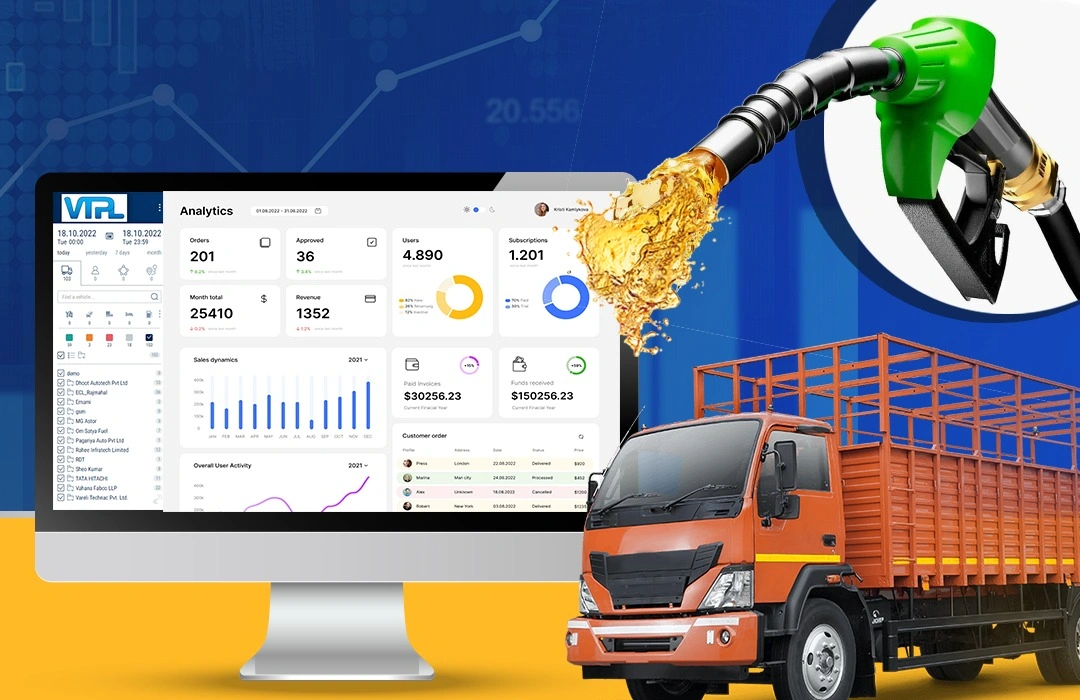
See the Fuel Story Behind Every Vehicle
A useful fuel dashboard should do more than display a tank percentage.
Diselmap brings fuel status, event history, consumption information and vehicle context together so fleet managers can move from “How much fuel did we buy?” to “What actually happened to the fuel?”
Dashboard Views Can Help Teams Review
- Current Fuel Status
- Refill & Drain Events
- Vehicle-Wise History
- Consumption Trends
- Event Location
- Exception Monitoring
- Historical Records
- Downloadable Reporting
- FROM MONITORING TO BETTER CONTROL
What Better Fuel Data Changes for a Fleet
01.
Investigate Fuel Loss Faster
When an unusual tank-level change is recorded, teams have event data to start an investigation instead of relying entirely on assumptions or manual records.
02.
Verify Fuel Activity
A digital history of fuel-level changes provides another source of information when reviewing refuelling and consumption records.
03.
Find Inefficient Vehicles
Vehicle-wise trends can help fleet managers identify assets whose consumption deserves closer attention.
04.
Reduce Manual Fuel Administration
Centralised information reduces the need to piece together fuel activity from multiple disconnected records.
05.
Improve Fuel Accountability
Clearer records help create greater accountability around vehicle use, refuelling and fuel-related operations.
- BUILT FOR FUEL-INTENSIVE OPERATIONS
Fuel Management for Fleets, Equipment and Mobile Assets
Industries We Empower with Intelligent Fuel Management
Diselmap’s Fuel Management Software is designed to help organisations across various industries monitor fuel consumption, improve fuel efficiency, and reduce operating costs. Whether you manage commercial fleets, heavy equipment, or specialised vehicles, our intelligent solution provides complete fuel visibility and operational control.
01.
Logistics & Transportation
Commercial Trucks and Transport Fleets
Track vehicle fuel activity across long-distance and regional operations, compare consumption between trucks, review refill events and investigate unusual fuel behaviour with location context.
02.
Construction & Mining
Heavy Equipment and Site Vehicles
Monitor fuel activity across excavators, loaders, tippers, backhoe loaders, cranes and other diesel-powered equipment where manual fuel control can become difficult across large sites.
03.
Manufacturing & Distribution
Delivery and Distribution Fleets
Monitor fuel consumption across delivery vehicles, material-movement fleets, and distribution operations. Compare vehicle-wise fuel usage, review refuelling activity, and maintain clearer fuel records across multiple routes and locations.
04.
Oil & Gas
Field Vehicles and Remote Operations
Monitor fuel activity across field vehicles, service fleets, generators, and mobile assets operating across remote or distributed locations. Use fuel data and location context to improve visibility and investigate unusual fuel events.
05.
Fleet Rental & Leasing
Multi-Vehicle Fleet Operations
Maintain better visibility into fuel activity across vehicles used by different drivers, customers or operating teams.
- CONNECTED FUEL INTELLIGENCE
Fuel Data Becomes More Valuable When It Has Context
Fuel Level Sensor Integration
Use compatible fuel monitoring hardware to capture tank-level changes needed for vehicle-level fuel visibility.
Key Benefits
- Accurate Tank-Level Visibility
- Refill & Drain Detection
- Better Fuel Accountability
GPS & Location Context
Associate significant fuel events with available vehicle location information to support investigations.
Key Benefits
- Fuel Event Location Tracking
- Faster Incident Investigation
- Improved Route-Level Visibility
Telematics Integration
Connect fuel activity with broader fleet information rather than analysing fuel as an isolated data source.
Key Benefits
- Connected Vehicle Insights
- Better Fuel Performance Analysis
- Centralised Fleet Monitoring
CAN Bus Data
Where supported by the vehicle and implementation, available CAN data can provide additional operational context for fleet analysis.
Key Benefits
- Access Vehicle Operating Data
- Improve Consumption Analysis
- Support Deeper Fleet Diagnostics
Cloud Analytics
Convert connected data into dashboards, trends, reports and useful management information.
Key Benefits
- Real-Time Fuel Dashboards
- Historical Trend Analysis
- Smarter Fuel Reporting
Alerts & Exception Management
Direct fleet-manager attention toward unusual events instead of requiring constant manual monitoring.
Key Benefits
- Instant Abnormal-Event Alerts
- Faster Response to Fuel Issues
- Reduced Manual Monitoring
Trusted by businesses to improve fuel visibility, reduce costs, and optimise operations with intelligent fleet technologies.
- FUEL MONITORING VS FUEL MANAGEMENT
A Fuel Management System Does More Than Show Fuel Level
A fuel monitoring system primarily helps observe fuel level, usage and changes in the tank.
A fuel management system uses that monitored data as part of a broader process that can include event detection, alerts, historical analysis, reports, vehicle identification, location context and fleet-wide performance review.
| Fuel Monitoring | Fuel Management |
|---|---|
| Shows fuel information | Helps teams manage fuel operations |
| Tracks level changes | Organises changes into useful events |
| Provides consumption data | Supports analysis and investigation |
| Focuses on an individual reading | Builds historical vehicle records |
| Answers “What is happening?” | Helps answer “Why does it matter?” |
For commercial fleets, the combination of fuel monitoring hardware and management software provides much greater operational value than fuel-level information alone.
- FUEL MANAGEMENT SYSTEM FAQ
Questions Fleet Operators Ask Before Implementing Fuel Monitoring
Find answers to common questions about Diselmap’s fuel management solutions, including fuel monitoring, theft prevention, system integration, and business benefits.
What is a Fuel Management System ?
A Fuel Management System combines fuel data collection and software to help organisations monitor fuel levels, consumption, refuelling, unusual fuel loss and historical fuel activity across vehicles or equipment.
How is fuel level measured in a fleet vehicle?
Fuel data can come from compatible tank-level sensors or available vehicle data sources, depending on the vehicle and implementation. The collected information is then transmitted to monitoring software for analysis and reporting.
How can a Fuel Management System identify fuel theft?
The system can flag significant unexpected decreases in fuel level. Fleet managers can then review the event alongside available vehicle, time and location information to investigate whether the event represents draining, leakage or another operational cause.
Avoid saying every sudden drop is theft. That distinction increases trust.
Can the system identify refuelling events?
Changes that significantly increase recorded fuel level can be used to identify and review potential refuelling activity, depending on the monitoring configuration and data available.
What is the difference between GPS tracking and fuel monitoring?
GPS tracking primarily provides vehicle location and movement information. Fuel monitoring focuses on fuel levels and fuel-related activity. Combining them adds location context to fuel events.
What is the difference between a fuel monitoring system and a Fuel Management System?
Fuel monitoring focuses on observing fuel data. Fuel management goes further by organising that data into alerts, reports, trends and operational information that fleet managers can use to investigate and improve fuel control.
Can fuel monitoring integrate with CAN Bus data?
On compatible vehicles and implementations, available CAN Bus data can complement GPS, fuel monitoring and other telematics information. The data available varies by vehicle manufacturer, model and integration.
What vehicles can use fuel monitoring?
Applications can include commercial trucks, buses, construction equipment, mining machinery and other diesel-powered assets, subject to vehicle and hardware compatibility.
Does fuel monitoring help improve fuel efficiency?
Fuel data can help identify unusual consumption patterns and vehicles requiring further investigation. Fleet operators can then examine factors such as utilisation, driving conditions, vehicle performance and operational practices.
Can multiple vehicles be monitored from one platform?
A fleet fuel management platform is designed to centralise information from connected vehicles so fleet managers can review multiple assets through one system.
- FUEL EVENT MONITORING
Fuel Events Worth Monitoring Across Your Fleet
Diselmap helps fleet operators monitor important fuel events across connected vehicles and equipment, including refuelling, sudden fuel drops, abnormal consumption, and long-term usage trends. By reviewing these events with vehicle and historical context, teams can investigate unusual activity faster, improve fuel accountability, and make better decisions about fleet fuel performance.
Refuelling Activity
Review significant increases in recorded fuel level and maintain vehicle-wise refill history.
Unexpected Fuel Drops
Identify abnormal decreases that may require investigation for draining, leakage or other causes.
Abnormal Consumption
Compare vehicle fuel behaviour and identify assets showing unusual consumption patterns.
Historical Fuel Trends
Analyse previous fuel activity to spot recurring patterns, exceptions and changes over time.
- Ready to Optimise Your Fuel Operations?
Discover the Right Fuel Solution for Your Business
Take control of fuel consumption, reduce fuel costs, and improve operational efficiency with Diselmap’s intelligent Fuel Management System. Gain real-time fuel visibility, actionable insights, and advanced analytics to make smarter business decisions and maximise fleet performance.
- START WITH YOUR FLEET REQUIREMENTS
Find the Right Fuel Monitoring Setup for Your Vehicles
Every fleet is different. Vehicle type, tank configuration, operating environment, available data and monitoring objectives can affect the right fuel-management approach.
Talk to Diselmap about your fleet and find a solution designed to give your team clearer fuel visibility, stronger event records and better operational control.