
- Our Article
Fleet Tracking vs Fleet Visibility :
What’s the Difference for Fleet Managers?
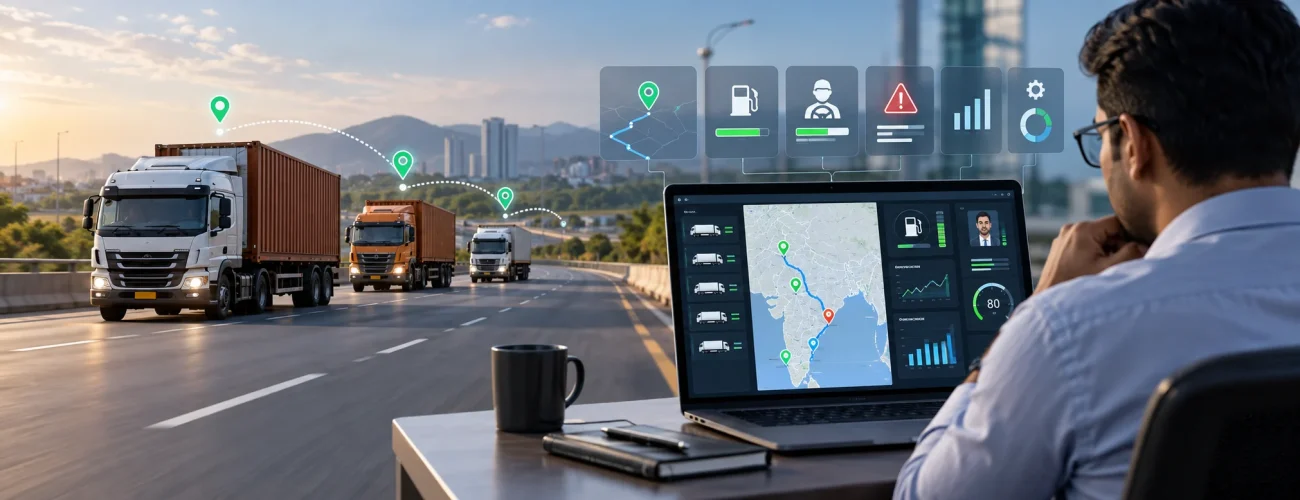
Knowing where a vehicle is located is important for any fleet operation. But location alone does not always tell a fleet manager what is actually happening across the fleet.This is where the difference between fleet tracking and fleet visibility becomes important.A fleet tracking system primarily helps businesses monitor the location and movement of vehicles. Fleet visibility goes further by combining location data with information such as vehicle status, routes, driver activity, fuel behaviour, utilization, alerts and operational events.
For fleet managers handling commercial vehicles, understanding this difference can help them decide what level of monitoring they need to improve day-to-day fleet operations.This guide explains fleet tracking vs fleet visibility, how both technologies work, what information they provide and how they can work together within a modern fleet management system.
What Is Fleet Tracking?
Fleet tracking is the process of monitoring the location and movement of vehicles using GPS and connected tracking technology.
A GPS device installed in a vehicle collects location information and communicates that data to a fleet tracking platform. Fleet managers can then view vehicles on a digital map.
A typical fleet tracking system can provide information such as:
- Current vehicle location
- Vehicle movement
- Trip history
- Route travelled
- Vehicle speed
- Stops and stoppage duration
- Geofence entry and exit
- Ignition status
- Distance travelled
For businesses operating multiple commercial vehicles, fleet tracking provides a centralized way to understand where vehicles are and where they have travelled.
Simple Example of Fleet Tracking
Consider a logistics company operating 50 delivery vehicles.
A fleet manager wants to know:
- Where each vehicle is located
- Whether a vehicle has reached a customer site
- Which route the driver followed
- How long the vehicle remained stopped
- Whether the vehicle entered or left a defined location
A GPS-based vehicle tracking system can provide this information.
Fleet tracking therefore answers an important operational question:
“Where are my vehicles and where have they been?”
What Is Fleet Visibility?
Fleet visibility provides a broader operational view of vehicles, drivers and fleet activity.
Instead of focusing only on location, fleet visibility combines data from GPS tracking, telematics devices, sensors and vehicle systems to help fleet managers understand what is happening across their operation.
Depending on the technology installed, fleet visibility may include:
- Real-time vehicle location
- Driver behaviour
- Vehicle speed
- Idling
- Fuel level
- Refuelling events
- Unexpected fuel drops
- Vehicle utilization
- Engine hours
- Vehicle health information
- CAN Bus parameters
- Route deviation
- Geofence events
- Maintenance information
- Safety events
- Historical fleet trends
Fleet visibility therefore answers a broader question:
“What is happening across my fleet, and where should I pay attention?”
This difference is important because knowing where a vehicle is located does not automatically explain whether that vehicle is being operated efficiently.
Fleet Tracking vs Fleet Visibility: Key Differences
Although the terms are sometimes used interchangeably, they describe different levels of operational insight.
| Area | Fleet Tracking | Fleet Visibility |
|---|---|---|
| Vehicle location | Yes | Yes |
| Live map tracking | Yes | Yes |
| Trip history | Yes | Yes |
| Route monitoring | Yes | Yes |
| Geofencing | Usually | Usually |
| Driver behaviour | Limited or optional | Can be integrated |
| Fuel monitoring | Usually not location-only | Can be integrated |
| Vehicle diagnostics | Limited | Can include telematics/CAN data |
| Utilization monitoring | Basic | More detailed |
| Operational alerts | Basic tracking alerts | Multiple fleet-event alerts |
| Maintenance visibility | Limited | Can be connected |
| Overall purpose | Track vehicle movement | Understand fleet operations |
The main distinction is therefore not simply whether GPS is being used.
It is the depth of operational information available to the fleet manager.
How GPS Vehicle Tracking Fits Into Fleet Visibility
GPS tracking is often one of the foundations of fleet visibility.
A GPS vehicle tracking system provides information such as coordinates, vehicle movement, routes and speed. This location data can then be combined with additional information collected through telematics devices and sensors.
For example, a fleet manager might see that a truck is stopped at a particular location.
GPS tells the manager:
The truck is stopped here.
Additional fleet data might reveal:
- The engine is still running
- The vehicle has been idling for 25 minutes
- Fuel consumption has continued during the stop
- The location is outside the planned delivery point
This creates much more operational context than location information alone.
GPS tracking therefore remains extremely valuable, but it becomes more useful when connected with other fleet data.
From Vehicle Tracking to Operational Visibility
Fleet technology can be viewed as several connected levels.
Level 1: Vehicle Tracking
The business knows the location and movement of its vehicles.
Typical information includes:
- Current location
- Speed
- Route
- Stops
- Trip history
Level 2: Fleet Monitoring
The business begins monitoring vehicle activity and operational events.
This can include:
- Idling
- Geofence activity
- Route deviation
- Driver behaviour
- Vehicle usage
Level 3: Fleet Visibility
Data from multiple fleet systems is brought together to provide a broader operational picture.
Fleet managers may monitor:
- Vehicles
- Drivers
- Fuel
- Routes
- Utilization
- Safety events
- Vehicle health
- Maintenance requirements
Level 4: Operational Decision-Making
The collected information is then used to identify exceptions and make operational decisions.
For example:
- Investigating excessive idling
- Reviewing repeated route deviations
- Identifying underutilized vehicles
- Detecting abnormal fuel events
- Planning preventive maintenance
- Reviewing unsafe driving patterns
This is where fleet visibility becomes more than simply displaying vehicles on a map.
Why Location Alone May Not Be Enough
Vehicle location is essential, but many fleet problems cannot be identified from location alone.
Consider the following examples.
Excessive Idling
A vehicle may appear stationary on a tracking map.
Without additional information, the fleet manager may not know whether the engine is switched off or running unnecessarily.
Fleet monitoring can help identify extended idling events.
Fuel Loss
GPS can identify where a vehicle was located.
A connected fuel monitoring system may additionally identify an unusual reduction in recorded fuel level while the vehicle was stopped.
The combination of both data points provides more useful context for investigation.
Driver Behaviour
Vehicle tracking may show the route and average movement of a vehicle.
Driver behaviour monitoring can provide additional information about events such as:
- Harsh acceleration
- Harsh braking
- Overspeeding
- Sharp cornering
- Excessive idling
This gives fleet managers better visibility into how vehicles are being operated.
Vehicle Health
A vehicle may be following its normal route while developing a mechanical issue.
When telematics is connected to supported vehicle data sources, fleet managers may receive additional information related to vehicle operation or diagnostic events.
Fleet visibility therefore helps connect where the vehicle is with what the vehicle is doing.
What Information Can a Fleet Visibility Platform Bring Together?
The exact information available depends on the installed hardware, vehicle type and connected systems.
A modern fleet management environment may combine several types of data.
GPS Tracking Data
GPS provides the basic location layer.
It can support:
- Live vehicle tracking
- Historical routes
- Distance travelled
- Geofence monitoring
- Stop analysis
Telematics Data
Telematics devices can transmit vehicle and operational information to a central platform.
This may include:
- Ignition information
- Speed
- Movement
- Engine hours
- Driving events
Fuel Monitoring Data
Where compatible fuel monitoring hardware is installed, fleets may monitor:
- Fuel level
- Refuelling activity
- Unexpected fuel drops
- Fuel consumption behaviour
- Historical fuel trends
Driver Behaviour Data
Driver monitoring can help identify recurring driving patterns and events.
Fleet managers can use this information to support driver coaching and fleet safety programs.
Vehicle Data
Depending on compatibility and integration, CAN Bus or diagnostic data can provide additional information about vehicle operation.
This can help fleet managers move from simple location monitoring toward a more connected view of vehicle performance.
Fleet Visibility for Commercial Fleet Operations
The value of fleet visibility becomes clearer as fleet size and operational complexity increase.
Logistics and Transport Fleets
Fleet managers may need visibility into:
- Vehicle movement
- Delivery routes
- Unplanned stops
- Trip progress
- Driver activity
- Fuel usage
Construction Fleets
Construction operations often include trucks, excavators, loaders and other heavy equipment operating across multiple sites.
Fleet visibility can help monitor:
- Equipment location
- Operating hours
- Utilization
- Fuel activity
- Movement between sites
Oil and Gas Fleets
Vehicles may operate across remote or widely distributed locations.
Fleet visibility can help central operations teams monitor vehicle movement and selected safety or operational events from a centralized platform.
Service Fleets
Businesses operating service vehicles can use vehicle tracking and fleet monitoring to understand:
- Technician location
- Vehicle availability
- Customer-site arrivals
- Route activity
- Daily vehicle utilization
Benefits of Combining Fleet Tracking and Fleet Visibility
Fleet tracking should not be viewed as competing with fleet visibility.
Tracking is an important component of broader visibility.
When both work together, fleet managers can gain several operational advantages.
Faster Response to Fleet Events
Instead of manually checking multiple sources of information, managers can review relevant fleet events from a centralized system.
Better Understanding of Vehicle Utilization
Location and trip history can be combined with operating data to help identify vehicles that are heavily used, lightly used or inactive.
Improved Route Monitoring
Fleet managers can compare actual vehicle movements with expected operating patterns and investigate significant deviations.
Better Fuel Oversight
Connecting location information with compatible fuel monitoring systems provides additional context around refuelling, consumption and abnormal fuel events.
Stronger Driver Safety Monitoring
Vehicle movement can be combined with driver behaviour data to help identify patterns requiring coaching or investigation.
Improved Maintenance Planning
Engine hours, mileage and supported vehicle data can help fleet teams plan maintenance based on actual vehicle activity.
Does Every Fleet Need Full Fleet Visibility?
Not necessarily.
The right technology depends on the fleet’s operational requirements.
A small business may only need basic vehicle tracking to know where vehicles are located.
A larger fleet may need additional information around:
- Fuel
- Drivers
- Vehicle health
- Maintenance
- Utilization
- Safety
- Equipment activity
Fleet managers should therefore begin by identifying the operational questions they need their system to answer.
For example:
Do we only need to know where vehicles are?
A GPS vehicle tracking system may meet the requirement.
Do we also need to understand fuel activity, driver behaviour and vehicle utilization?
A broader fleet management and telematics platform may be more appropriate.
What Should Fleet Managers Look for in a Fleet Tracking and Visibility System?
When evaluating a solution, consider how well the system matches actual operational requirements.
Important capabilities may include:
Real-Time Vehicle Tracking
Fleet managers should be able to locate active vehicles quickly and review recent movements.
Trip History
Historical routes help teams review completed journeys, stops and vehicle activity.
Geofencing
Virtual geographic boundaries can help identify when vehicles enter or leave selected locations.
Alerts
Useful systems should allow fleet teams to focus on exceptions rather than continuously watching a map.
Driver Monitoring
Businesses focused on safety may require driver behaviour information alongside vehicle tracking.
Fuel Monitoring Integration
Fuel-intensive fleets may benefit from connecting compatible fuel sensors with their fleet platform.
Vehicle Data Integration
For supported vehicles, CAN Bus and telematics integration can expand the information available to fleet managers.
Reporting and Historical Analysis
Historical data allows fleet managers to move beyond individual incidents and identify longer-term operating patterns.
Fleet Tracking vs Fleet Visibility: Which One Should You Choose?
The decision depends on what the fleet needs to manage.
Choose fleet tracking when your primary requirement is:
- Knowing where vehicles are
- Reviewing vehicle routes
- Monitoring trips
- Tracking stops
- Using geofences
Consider broader fleet visibility when you also need to understand:
- How vehicles are being operated
- How drivers are behaving
- How fuel is being consumed
- How assets are being utilized
- Whether operational exceptions are occurring
- When vehicles may require maintenance attention
For many commercial fleets, the two are not separate systems.
Fleet tracking provides the location foundation, while telematics, sensors and connected vehicle data expand that foundation into broader fleet visibility.
How Diselmap Supports Connected Fleet Visibility
Diselmap brings together fleet technologies designed to help businesses monitor commercial vehicles and connected fleet operations from a centralized environment.
Depending on fleet requirements and compatible hardware, solutions can support areas such as:
- GPS tracking
- Fleet monitoring
- Fuel monitoring
- Driver behaviour
- Vehicle telematics
- CAN Bus monitoring
- Fleet safety
- Maintenance visibility
By connecting relevant vehicle and operational information, fleet managers can move beyond simply knowing where vehicles are and gain a clearer understanding of what is happening across their fleet.
Frequently Asked Questions
What is the difference between fleet tracking and fleet visibility?
Fleet tracking primarily focuses on vehicle location, movement, routes and trips. Fleet visibility combines tracking data with additional operational information such as driver behaviour, fuel activity, vehicle status, utilization and fleet events.
Is GPS tracking the same as fleet management?
No. GPS tracking is one component of fleet management. Fleet management can also include fuel monitoring, driver safety, maintenance, utilization, reporting and other operational activities.
What is a fleet tracking system?
A fleet tracking system uses GPS and connected communication technology to monitor the location and movement of fleet vehicles through a centralized software platform.
What is fleet monitoring?
Fleet monitoring involves reviewing vehicle and operational activity across a fleet. It can include GPS location, trips, idling, routes, driver events, fuel information and other connected data.
Can fleet tracking help monitor fuel?
GPS tracking alone primarily provides location information. Fuel monitoring generally requires compatible sensors, vehicle data or other connected hardware integrated with the fleet platform.
What is real-time vehicle tracking?
Real-time vehicle tracking uses GPS and communication technology to update the approximate current location and movement of a vehicle within a tracking platform.
Can fleet visibility help reduce vehicle downtime?
Fleet visibility can give managers better access to mileage, engine hours, vehicle activity and supported diagnostic information. This data can help fleet teams plan preventive maintenance and investigate vehicle issues earlier.
Is fleet visibility useful for construction equipment?
Yes. Connected fleet systems can also be used for compatible construction vehicles and heavy equipment to monitor location, operating activity, fuel information and utilization.
Conclusion
Move Beyond Tracking to Complete Fleet Visibility
Fleet tracking gives businesses an essential starting point by showing where vehicles are, where they have travelled, and how they are moving. But as fleet operations become more complex, location data alone may not provide enough information for effective operational decisions.
Connected fleet visibility brings GPS tracking together with telematics, fuel monitoring, driver behaviour, vehicle data, utilization and operational alerts. This gives fleet managers a clearer picture of not only where vehicles are, but also how they are being operated and where attention may be required.
For commercial fleets, the goal is not simply to collect more data. It is to turn relevant vehicle and operational information into better visibility, faster decisions and more efficient fleet management.
Get Better Visibility Across Your Fleet with Diselmap
Want to move beyond basic vehicle tracking and gain greater control over your fleet operations?Diselmap provides connected fleet management solutions for GPS tracking, real-time fleet visibility, fuel monitoring, telematics, driver behaviour monitoring, vehicle data and fleet safety.
Whether you operate a logistics fleet, commercial vehicles, construction equipment or other fleet assets, Diselmap can help you build a monitoring solution around your operational requirements.Explore Diselmap Fleet Management Solutions or contact our team to discuss your fleet visibility requirements.