
- Our Article
Fuel Management for Fleets: Complete Guide to Fuel Monitoring & Cost Control
Fuel is one of the largest ongoing expenses for businesses that operate vehicles. For transport companies, logistics providers, construction businesses, field-service organizations, and other fleet operators, even small amounts of unnecessary fuel consumption can add up to significant costs over time.
Fuel management for fleets is the process of monitoring, analyzing, and controlling how fuel is purchased, consumed, and used across vehicles and operations. Modern fleet fuel management combines GPS tracking, fuel monitoring, telematics, driver behavior data, vehicle information, and analytics to help businesses understand where fuel is being used and identify opportunities to reduce waste.
A data-driven approach can help fleet managers control fuel costs, identify inefficient vehicle use, detect unusual fuel activity, improve driver performance, and make better operational decisions.
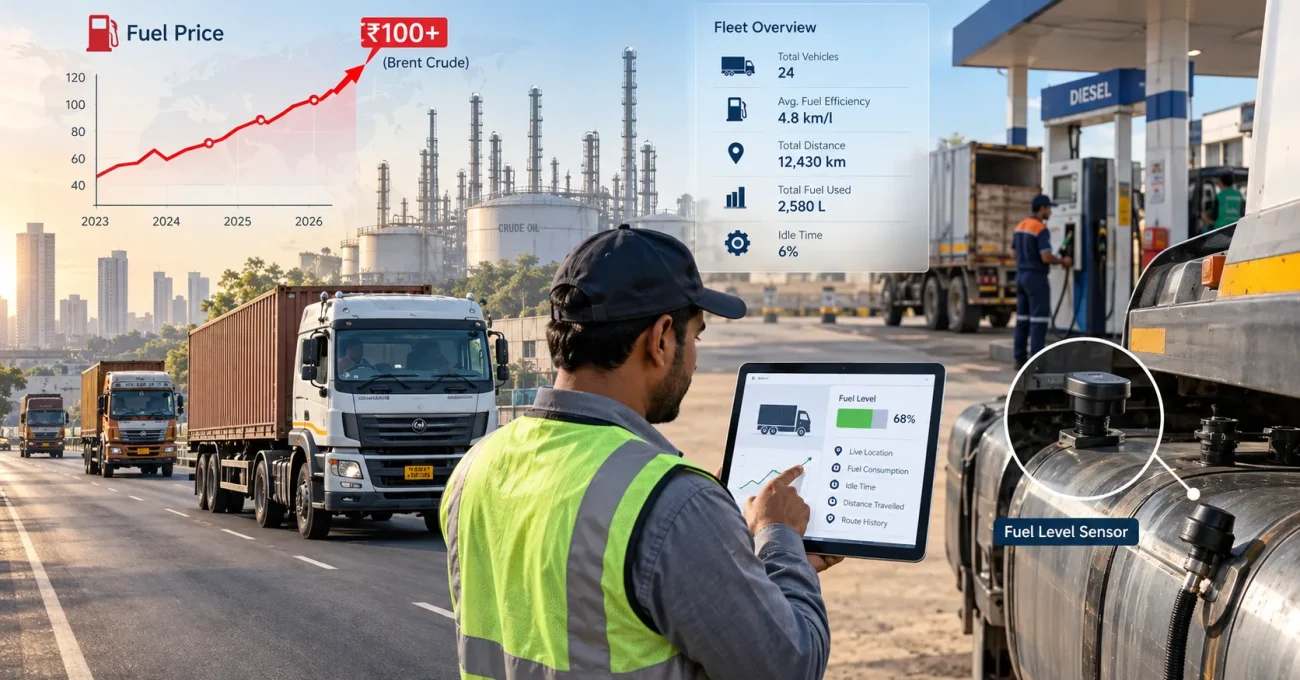
What Is Fuel Management for Fleets?
Fuel management for fleets involves using technology, processes, and performance data to monitor and control fuel consumption across a fleet of vehicles.
Traditional fuel tracking may rely on fuel receipts, manual records, driver reports, or basic mileage calculations. These methods can make it difficult to identify exactly where fuel is being consumed or why costs are increasing.
A modern fleet fuel management system can combine information such as:
- Vehicle location
- Distance traveled
- Fuel consumption
- Fuel level
- Engine hours
- Idle time
- Driver behavior
- Route efficiency
- Vehicle utilization
- Maintenance information
By bringing this information together, fleet managers can identify fuel waste and take action based on actual operating data.
Why Fleet Fuel Management Matters
Fuel costs can vary significantly depending on vehicle type, route conditions, driving behavior, traffic, vehicle condition, and operational requirements.
Without accurate information, a business may know that fuel expenses are increasing but may not know the underlying cause.
Fleet fuel monitoring provides greater visibility into vehicle and fuel usage.
It can help businesses:
- Monitor fuel consumption
- Identify excessive fuel use
- Reduce unnecessary mileage
- Detect excessive engine idling
- Improve driver behavior
- Monitor vehicle utilization
- Identify unusual fuel-level changes
- Improve route efficiency
- Control operating costs
- Make data-driven fleet decisions
The goal is not simply to use less fuel. The goal is to understand where, when, and why fuel is being used and then take appropriate action.
How Fuel Monitoring for Fleets Works
Modern fuel monitoring can combine information from vehicle systems, sensors, GPS devices, and telematics platforms.
A typical process can work like this:
Vehicle → Sensors/Vehicle Data → Telematics Device → Fleet Management Platform → Dashboard & Reports → Fleet Manager Action
Depending on the vehicle and system configuration, fuel-related information may come from sources such as fuel level sensors, vehicle data, engine information, and other telematics inputs.
The platform can then help managers review fuel consumption, vehicle activity, routes, idle time, and other performance indicators.
This makes it easier to identify unusual patterns and investigate the reasons behind high fuel consumption.
Key Components of a Fleet Fuel Management System
A complete fleet fuel management strategy can use several technologies together.
GPS Tracking
GPS tracking provides information about vehicle location, routes, trip history, and distance traveled.
This information can help managers identify unnecessary trips, inefficient routes, unauthorized vehicle use, and excessive mileage.
Fuel Level Sensors
Fuel level sensors can provide information about the amount of fuel in a vehicle’s tank.
When fuel-level data is combined with GPS and vehicle information, managers can investigate unusual changes in fuel levels and identify potentially unauthorized fuel removal or abnormal consumption.
Learn more about fuel level sensors to understand how sensor technology can support fleet fuel monitoring.
Telematics
Telematics combines vehicle, location, and operational data to provide a broader view of fleet performance.
Depending on the vehicle and hardware, telematics systems can provide information related to:
- Fuel consumption
- Mileage
- Engine hours
- Vehicle activity
- Driver behavior
- Engine performance
- Vehicle utilization
This information helps fleet managers understand the factors affecting fuel efficiency.
CAN Bus Data
CAN bus systems can provide access to vehicle information generated by electronic control systems.
When available and properly integrated, CAN bus data can help fleet operators understand vehicle performance, fuel-related information, engine activity, and other operational parameters.
CAN bus information can therefore complement GPS tracking and fuel monitoring data.
Driver Behavior Monitoring
Driving behavior can have a direct effect on fuel consumption.
Fleet technology can help identify events such as:
- Harsh acceleration
- Harsh braking
- Speeding
- Excessive idling
- Sudden changes in driving patterns
Managers can use this information to provide targeted driver coaching and encourage more efficient driving.
Fleet Management Software
A fleet management platform brings different data sources together in one place.
Instead of reviewing separate records, managers can use dashboards, reports, alerts, and historical data to monitor fleet performance and identify areas that require attention.
7 Strategies to Reduce Fleet Fuel Costs
Technology can provide the information required to improve fuel efficiency, but businesses still need effective processes and actions.
1. Monitor Real-Time Vehicle Location
Real-time GPS tracking is one of the most useful tools for improving fleet fuel efficiency.
Fleet managers can see where vehicles are, monitor routes, and review trip history from a centralized platform.
This visibility can help identify unnecessary travel and inefficient vehicle usage.
For example, a manager may discover that a vehicle regularly takes longer routes or makes unnecessary trips. The business can then investigate the issue and improve route planning.
Real-time tracking can help businesses:
- Monitor vehicle locations
- Review trip history
- Identify unnecessary travel
- Improve route visibility
- Reduce unauthorized vehicle use
- Improve fleet utilization
Better visibility is an important first step toward better fuel management.
2. Optimize Routes and Reduce Unnecessary Mileage
Route planning has a direct impact on fuel consumption.
Longer routes generally mean more distance traveled, which can increase fuel use and operating costs.
Fleet technology can help managers compare planned routes with actual vehicle movement and identify:
- Frequently delayed routes
- Unnecessary detours
- Repeated trips
- High-traffic areas
- Inefficient delivery sequences
- Excessive travel distances
By improving route planning, businesses can reduce unnecessary mileage and help drivers reach their destinations more efficiently.
3. Reduce Excessive Engine Idling
Engine idling can result in fuel consumption even when a vehicle is stationary.
When unnecessary idling occurs across multiple vehicles for extended periods, the cumulative fuel cost can become significant.
Fleet tracking and telematics systems can help identify excessive idling.
Managers can review idle-time data and determine which vehicles or drivers regularly leave engines running when they are not needed.
Businesses can then introduce appropriate driver guidelines and training.
Reducing unnecessary idle time can help:
- Lower fuel consumption
- Reduce operating costs
- Reduce unnecessary engine operation
- Improve fleet efficiency
- Reduce fuel-related emissions
4. Improve Driver Behavior
Driver behavior can influence fuel consumption and overall vehicle efficiency.
Aggressive acceleration, hard braking, speeding, and unnecessary idling may contribute to higher fuel usage.
Fleet technology can provide information about driving patterns and help managers understand individual driver performance.
Depending on the system, managers may be able to monitor:
- Harsh acceleration
- Harsh braking
- Speeding
- Excessive idling
- Sudden driving events
Instead of relying only on assumptions, managers can use actual fleet data to provide targeted driver training.
Encouraging smoother and more consistent driving can support both fuel efficiency and road safety.
5. Use Telematics to Monitor Fuel Efficiency
GPS tracking shows where vehicles are located, while telematics can provide a broader view of vehicle and driver performance.
Depending on the hardware and vehicle, telematics can collect information related to:
- Fuel consumption
- Vehicle activity
- Engine performance
- Driver behavior
- Mileage
- Engine hours
- Vehicle utilization
This information can help managers identify vehicles that consume more fuel than expected.
For example, if two similar vehicles travel similar distances but one consistently consumes more fuel, the business can investigate possible causes.
These may include:
- Driving behavior
- Excessive idling
- Route selection
- Vehicle condition
- Maintenance issues
- Differences in vehicle utilization
Data-driven monitoring makes it easier to investigate the actual causes of high fuel consumption.
6. Maintain Vehicles Regularly
Vehicle condition can affect fuel efficiency.
Poor maintenance may contribute to inefficient vehicle operation, increased fuel consumption, unexpected breakdowns, and higher operating costs.
A fleet management system can help businesses track maintenance schedules and service information.
Regular maintenance may include:
- Engine servicing
- Oil changes
- Tire inspections
- Brake checks
- Filter replacement
- Vehicle diagnostics
- Preventive maintenance
Properly maintained vehicles are more likely to operate efficiently and reliably.
Preventive maintenance can also help reduce unexpected downtime and costly repairs.
7. Analyze Fleet Data and Set Fuel Performance Goals
Collecting fleet data is useful, but businesses need to analyze that information to make better decisions.
Fleet management platforms can provide reports that help managers compare vehicle and driver performance.
Useful fuel-related metrics include:
- Fuel consumption per vehicle
- Fuel consumption per kilometer or mile
- Fuel cost per kilometer or mile
- Idle time
- Distance traveled
- Vehicle utilization
- Driver behavior
- Route efficiency
- Fuel cost trends
Businesses can use these metrics to establish realistic fuel performance goals.
For example, managers can identify vehicles with unusually high fuel consumption and investigate the reason.
Regular reporting also makes it easier to measure whether fuel-saving initiatives are producing measurable improvements.
How Fleet Fuel Management Helps Prevent Fuel Theft
Fuel theft can create significant financial losses, particularly for businesses operating large fleets or vehicles with high fuel capacity.
Fuel monitoring technology can help businesses identify unusual fuel activity by comparing fuel-level changes with vehicle location, trip activity, and other available data.
Potential warning signs may include:
- Unexpected fuel-level drops
- Fuel loss while a vehicle is stationary
- Unusual fuel consumption
- Fuel activity outside expected operating times
- Differences between expected and actual fuel usage
When unusual activity is detected, fleet managers can investigate the event and determine whether it was legitimate fuel usage, a measurement issue, or potential fuel theft.
Combining fuel-level monitoring with GPS tracking and fleet analytics can provide greater visibility than relying only on fuel receipts or manual records.
Fleet Fuel Management KPIs to Track
Measuring fuel performance consistently is important for long-term fuel cost control.
Useful KPIs can include:
Fuel Consumption per Vehicle
Measures how much fuel each vehicle consumes over a specific period.
Fuel Consumption per Kilometer or Mile
Helps compare fuel efficiency across vehicles and routes.
Fuel Cost per Kilometer or Mile
Shows the fuel cost associated with vehicle usage.
Idle Time
Measures how long engines remain running while vehicles are stationary.
Fuel Consumption Variance
Helps identify vehicles whose fuel consumption differs significantly from expected performance.
Route Efficiency
Compares actual travel distance and routes with planned operations.
Vehicle Utilization
Shows how effectively vehicles are being used.
Fuel Theft or Fuel Loss Events
Tracks unusual fuel-level changes and investigated fuel-loss incidents.
Tracking these metrics over time helps businesses identify trends and measure the impact of fuel-saving initiatives.
How to Calculate Fleet Fuel Consumption
A simple way to calculate vehicle fuel efficiency is:
Fuel Efficiency = Distance Traveled ÷ Fuel Consumed
For example, if a vehicle travels 500 kilometers and consumes 50 liters of fuel:
500 ÷ 50 = 10 km/L
Businesses can use similar calculations across vehicles to identify differences in fuel efficiency.
For accurate analysis, managers should consider factors such as vehicle type, route conditions, load, driving behavior, traffic, and operating environment.
Comparing similar vehicles under similar operating conditions can provide more meaningful performance insights.
Benefits of Fuel Management for Fleets
Effective fleet fuel management can provide benefits beyond reducing fuel bills.
Lower Operating Costs
Using fuel more efficiently can help reduce one of the major recurring expenses associated with fleet operations.
Better Fleet Efficiency
Improved routes, driving behavior, vehicle utilization, and fuel monitoring can support more efficient operations.
Improved Vehicle Utilization
Better visibility helps businesses understand how vehicles are being used and where resources may be underutilized.
Reduced Vehicle Wear
Smoother driving and reduced unnecessary engine operation can help reduce vehicle stress and wear.
Better Driver Performance
Driver monitoring provides data that can support targeted coaching and performance improvement.
Better Fuel Theft Detection
Fuel-level monitoring and vehicle data can help businesses identify unusual fuel activity more quickly.
More Sustainable Fleet Operations
Reducing unnecessary fuel consumption can also help reduce fuel-related emissions.
How to Build a Fuel-Efficient Fleet Strategy
Technology alone does not reduce fuel costs.
Businesses should combine technology with clear operating procedures, regular monitoring, driver awareness, and continuous improvement.
A strong fuel management strategy can include:
- Track vehicles in real time
- Monitor fuel consumption and idle time
- Review driver behavior
- Optimize frequently used routes
- Maintain vehicles on schedule
- Compare vehicle performance
- Set measurable fuel-efficiency targets
- Review fuel reports regularly
- Investigate unusual fuel activity
- Train drivers using actual performance data
- Continuously improve fleet operations
This approach helps turn fleet data into measurable operational improvements.
What to Look for in Fleet Fuel Management Technology
When evaluating a fleet management or fuel monitoring solution, businesses should consider features that support their specific operational requirements.
Useful capabilities may include:
- Real-time GPS tracking
- Route monitoring
- Driver behavior monitoring
- Idle-time tracking
- Fuel consumption monitoring
- Fuel-level monitoring
- Vehicle maintenance management
- Geofencing
- Fleet reports
- Real-time alerts
- Dashboard analytics
- Mobile access
- Historical data analysis
The right combination of features depends on factors such as fleet size, vehicle types, operating environment, business requirements, and desired level of fuel visibility.
Why Data-Driven Fleet Management Matters
Fleet operations are becoming increasingly data-driven.
Businesses no longer need to rely only on manual records or driver reports. Modern fleet technology can provide information about vehicles, routes, fuel usage, driver behavior, and operational performance.
This allows managers to identify problems faster and make decisions based on measurable information.
Fuel management is one area where this approach can create significant value.
By combining GPS tracking, telematics, driver monitoring, route information, vehicle data, and fuel monitoring, businesses can develop a more complete view of fleet performance.
How DiselMap Can Help With Fleet Fuel Management
Reducing fleet fuel costs requires more than simply asking drivers to use less fuel.
Businesses need visibility into vehicle locations, routes, driving behavior, idle time, fuel usage, and overall fleet performance.
DiselMap’s fleet management technology can help businesses gain greater visibility into vehicle operations and make more informed decisions.
By using intelligent tracking and fleet management solutions, businesses can monitor vehicle activity, review route efficiency, identify inefficient driving patterns, and analyze fleet operations through data.
Whether you manage a small commercial fleet or a growing transportation operation, better visibility can help identify opportunities to reduce unnecessary costs and improve operational efficiency.
Frequently Asked Questions
What is fleet fuel management ?
Fleet fuel management is the process of monitoring, analyzing, and controlling fuel consumption across a fleet of vehicles. It can use GPS tracking, fuel monitoring, telematics, vehicle data, and analytics to improve fuel efficiency and control operating costs.
How does fuel monitoring help fleets ?
Fuel monitoring provides visibility into fuel consumption and usage patterns. When combined with vehicle and location data, it can help identify excessive consumption, unusual fuel activity, and opportunities to improve efficiency.
How can fleet managers reduce fuel costs?
Fleet managers can reduce fuel costs by optimizing routes, reducing unnecessary idling, improving driver behavior, maintaining vehicles properly, monitoring fuel consumption, and using fleet data to identify inefficient operations.
Can fuel monitoring help prevent fuel theft?
Yes. Fuel-level monitoring combined with GPS and vehicle data can help identify unusual fuel-level changes and other potentially suspicious fuel activity for further investigation.
What is the role of fuel level sensors in fleet management?
Fuel level sensors measure the amount of fuel in a vehicle’s tank. When integrated with fleet management technology, the data can help managers monitor fuel levels and identify unusual changes.
What fuel management KPIs should fleet managers track?
Common KPIs include fuel consumption per vehicle, fuel consumption per kilometer or mile, fuel cost per kilometer or mile, idle time, route efficiency, vehicle utilization, and fuel consumption variance.
Is GPS tracking the same as fuel monitoring?
No. GPS tracking primarily provides vehicle location and movement information, while fuel monitoring focuses on fuel usage and fuel levels. Integrating both types of data can provide a more complete view of fleet fuel performance.
How does driver behavior affect fuel consumption?
Behaviors such as aggressive acceleration, hard braking, speeding, and excessive idling can affect fuel consumption. Driver monitoring can help identify these behaviors and support targeted training.
Conclusion
Fuel management for fleets is about understanding how vehicles use fuel and taking action to reduce unnecessary consumption and costs.
Real-time GPS tracking, route optimization, idle monitoring, driver behavior analysis, telematics, fuel-level monitoring, preventive maintenance, and fleet analytics can all contribute to better fuel efficiency.
The most effective approach is not simply to use less fuel. It is to understand where, when, and why fuel is being used and use reliable data to improve fleet operations.
With the right technology, processes, and performance measurements, businesses can improve fuel visibility, control operating costs, reduce waste, identify unusual fuel activity, and build a more efficient fleet.
Ready to Reduce Your Fleet Fuel Costs?
Improve fuel efficiency, reduce unnecessary mileage, monitor driver behavior, and gain better control over your fleet with Diselmap’s intelligent fleet management solutions. Get real-time visibility into your vehicles, routes, driving patterns, and fleet performance so your business can make smarter decisions, reduce operating costs, and build a more efficient fleet.