
- Our Article
GPS Tracking vs. Telematics: Key Differences.
Managing a fleet requires accurate information about vehicles, drivers, routes, and daily operations. As fleet technology continues to improve, businesses often come across two important terms: GPS tracking and telematics.
Although these technologies are related, they are not exactly the same. GPS tracking mainly focuses on vehicle location and movement, while telematics can collect and analyze a much wider range of vehicle and driver data.
Understanding the difference between GPS tracking and telematics can help businesses choose the right technology for their fleet.
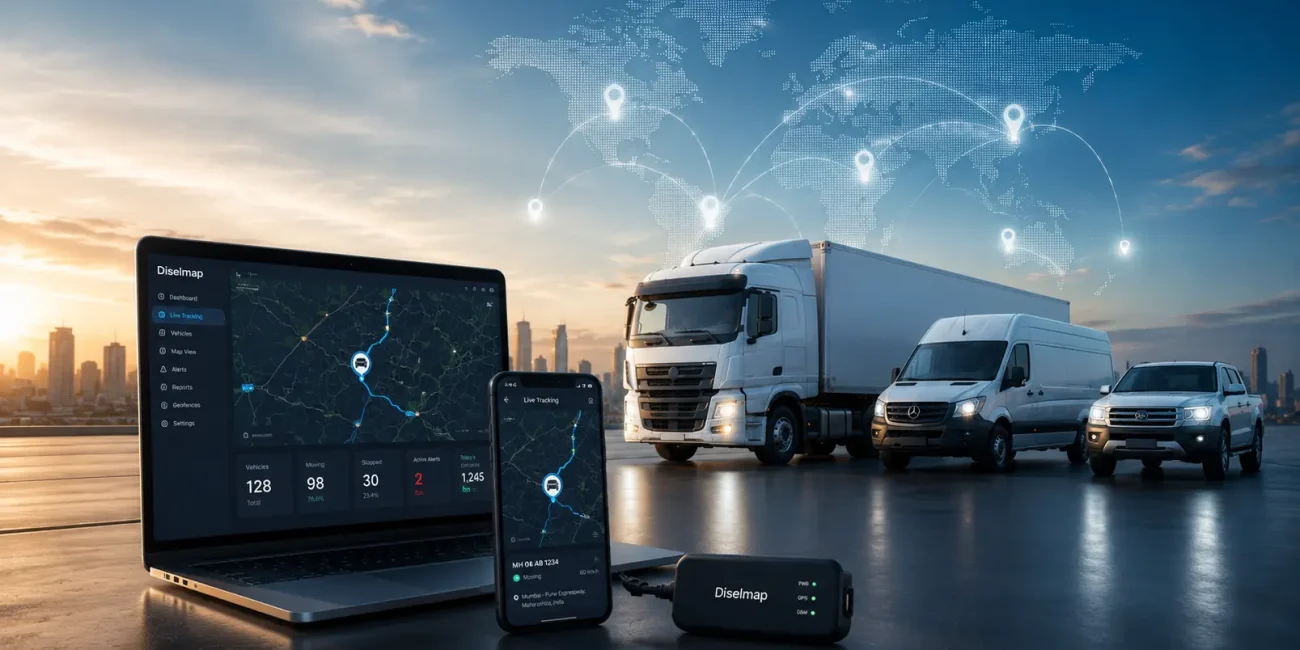
What Is GPS Tracking?
GPS tracking uses Global Positioning System technology to determine the location of a vehicle.
A GPS tracking device installed in a vehicle receives signals from satellites and uses them to determine the vehicle’s position. The location data can then be sent to a software platform where fleet managers can view vehicle movements.
GPS tracking systems commonly provide information such as:
- Current vehicle location
- Vehicle speed
- Travel routes
- Trip history
- Distance traveled
- Location alerts
- Geofencing information
GPS tracking is especially useful for businesses that need better visibility over their vehicles.
What Is Telematics?
Telematics combines telecommunications and information technology to collect, transmit, and analyze vehicle data.
A telematics system can use GPS tracking along with information from the vehicle’s onboard systems and sensors.
Depending on the solution, telematics can provide data about:
- Vehicle location
- Fuel consumption
- Engine performance
- Vehicle diagnostics
- Driver behavior
- Vehicle speed
- Harsh braking
- Rapid acceleration
- Maintenance information
- Mileage
- Engine hours
This makes telematics a broader technology than basic GPS tracking.
GPS Tracking vs. Telematics: Key Difference
The simplest way to understand the difference is this:
GPS tracking tells you where a vehicle is. Telematics can tell you where the vehicle is and provide additional information about how the vehicle and driver are performing.
GPS tracking focuses mainly on location and movement.
Telematics combines location data with vehicle, driver, and operational information.
| Feature | GPS Tracking | Telematics |
|---|---|---|
| Real-time location | Yes | Yes |
| Route history | Yes | Yes |
| Geofencing | Often | Often |
| Vehicle diagnostics | Limited | Yes |
| Fuel monitoring | Limited | Often |
| Driver behavior | Basic or limited | Yes |
| Maintenance data | Limited | Yes |
| Engine information | Limited | Yes |
| Fleet analytics | Basic | Advanced |
| Operational insights | Limited | Extensive |
1. Vehicle Location Tracking
GPS tracking is designed primarily to provide vehicle location information.
Fleet managers can see where vehicles are and review their travel history. This can be useful for delivery companies, logistics businesses, field service teams, and other organizations that rely on vehicles.
Telematics systems also provide location information, but they can combine it with additional vehicle and driver data.
2. Driver Behavior Monitoring
Basic GPS tracking may provide information about vehicle speed and movement.
Telematics can go further by monitoring driving events such as:
- Harsh braking
- Rapid acceleration
- Speeding
- Excessive idling
- Sudden changes in movement
This information can help fleet managers identify risky driving patterns and provide better driver training.
3. Vehicle Health and Diagnostics
One of the major advantages of telematics is its ability to collect vehicle information.
Depending on the hardware and system, telematics can connect with vehicle data sources to monitor engine and diagnostic information.
Managers may receive alerts when a vehicle requires attention.
This can help businesses take a proactive approach to vehicle maintenance.
4. Fuel Monitoring
Fuel costs can have a significant impact on fleet operating expenses.
GPS tracking can provide route and distance information, which may help managers identify inefficient travel.
Telematics can provide deeper fuel-related insights when supported by the vehicle and hardware.
Managers can use this information to identify excessive fuel consumption, unnecessary idling, and inefficient driving behavior.
5. Fleet Maintenance
Regular maintenance is important for keeping vehicles safe and reliable.
GPS tracking mainly provides location and movement information. It may not provide detailed vehicle health data.
Telematics can connect vehicle information with maintenance processes. Managers can use mileage, engine data, diagnostic alerts, and service information to plan maintenance more effectively.
This can help reduce unexpected breakdowns and vehicle downtime.
6. Route Planning and Fleet Efficiency
Both GPS tracking and telematics can support better route management.
GPS tracking helps managers understand vehicle locations and previous routes.
Telematics can combine location data with information about vehicle activity, driver behavior, and operational performance.
This broader view can help businesses improve route planning and overall fleet efficiency.
7. Real-Time Alerts
Real-time alerts can help fleet managers respond quickly to important events.
GPS tracking systems may provide alerts for:
- Vehicle movement
- Geofence entry or exit
- Speed
- Location changes
Telematics systems can provide additional alerts related to vehicle health, driver behavior, maintenance, and other operational events.
The available alerts depend on the specific telematics solution.
8. Fleet Data and Analytics
GPS tracking provides valuable location data.
Telematics can combine location data with vehicle and driver information to create more detailed fleet insights.
For example, businesses can analyze:
- Vehicle utilization
- Fuel consumption
- Driver performance
- Maintenance requirements
- Trip efficiency
- Vehicle downtime
- Operating trends
These insights can support better fleet management decisions.
9. Which Technology Is Better for Your Business?
The right option depends on your business requirements.
A basic GPS tracking solution may be suitable if your main goal is to:
- Track vehicle locations
- Monitor routes
- Improve fleet visibility
- Use geofencing
- Review trip history
A telematics solution may be better if you also need to:
- Monitor vehicle health
- Track driver behavior
- Analyze fuel usage
- Manage maintenance
- Review detailed fleet data
- Improve overall fleet efficiency
Businesses with larger or more complex fleets may benefit from the broader capabilities of telematics.
Can GPS Tracking and Telematics Work Together?
Yes.
GPS tracking is often an important part of a telematics system. In many modern fleet solutions, GPS location data is combined with vehicle and driver information.
This creates a more complete view of fleet operations.
Instead of only knowing where a vehicle is, fleet managers can gain insights into how the vehicle is being used and how efficiently the fleet is operating.
Benefits of Using GPS Tracking and Telematics
Using the right fleet technology can provide several benefits, including:
- Better vehicle visibility
- Improved driver safety
- Lower operating costs
- Better route management
- Reduced vehicle downtime
- Proactive maintenance
- Improved fuel efficiency
- Better fleet utilization
- More accurate reporting
- Faster decision-making
These benefits can help businesses improve daily operations and provide better service to customers.
GPS Tracking vs. Telematics: Which One Should You Choose?
If your business mainly needs vehicle location tracking, a GPS tracking solution may provide the features you need.
If you want a broader view of your fleet, telematics can provide additional vehicle, driver, and operational data.
Before choosing a system, consider your fleet size, business goals, budget, vehicle types, and reporting requirements.
The best solution is the one that provides the right information without adding unnecessary complexity to your operations.
How Diselmap Can Help With Fleet Management
Modern fleet operations require more than simply knowing where vehicles are.
Businesses need reliable information to manage vehicles, improve driver performance, control operating costs, and make better decisions.
Diselmap’s fleet management solutions can help businesses improve fleet visibility and manage their vehicles more efficiently.
With the right combination of tracking, monitoring, reporting, and fleet management tools, businesses can gain better control over their daily operations.
Frequently Asked Questions
What is the main difference between GPS tracking and telematics?
GPS tracking mainly provides vehicle location and movement information. Telematics combines GPS data with vehicle, driver, and operational information.
Is GPS tracking part of telematics?
Yes. GPS tracking is commonly used as one component of a telematics system.
Can telematics track vehicle location?
Yes. Telematics systems commonly include GPS tracking capabilities along with additional vehicle and driver data.
Is telematics better than GPS tracking?
It depends on your business needs. GPS tracking may be enough for basic location monitoring, while telematics is more suitable for businesses that need detailed vehicle and fleet insights.
Can telematics help reduce fleet costs?
Yes. Telematics can help businesses identify fuel waste, inefficient driving, unnecessary vehicle use, maintenance issues, and other factors that can increase operating costs.
Which businesses can use GPS tracking and telematics?
Logistics companies, transportation businesses, delivery services, construction companies, field service businesses, rental fleets, and many other organizations can use these technologies to improve fleet management.
Conclusion
GPS tracking and telematics are closely connected technologies, but they serve different purposes.
GPS tracking mainly focuses on vehicle location, movement, routes, and visibility. Telematics provides a broader set of capabilities by combining location information with vehicle, driver, and operational data.
For businesses that only need basic vehicle tracking, GPS may be enough. For businesses looking for deeper fleet insights, telematics can provide a more comprehensive solution.
Understanding these differences can help you choose the right fleet technology for your business and build a more efficient, safer, and better-connected fleet
Ready to Improve Your Fleet Operations?
Improve fleet visibility, monitor vehicle performance, reduce operating costs, and make smarter fleet decisions with Diselmap’s fleet management solutions. Whether you need reliable GPS tracking or a more comprehensive telematics approach, Diselmap can help you gain better control over your vehicles, drivers, routes, and daily fleet operations.