
- Our Article
Telematics Device: How It Works in Fleet Management
Modern fleets need more than basic vehicle location. Fleet managers also need to understand how vehicles are moving, how long they are operating, whether drivers are following routes, and whether a vehicle may need attention.A telematics device helps collect this information and send it to a fleet management platform.
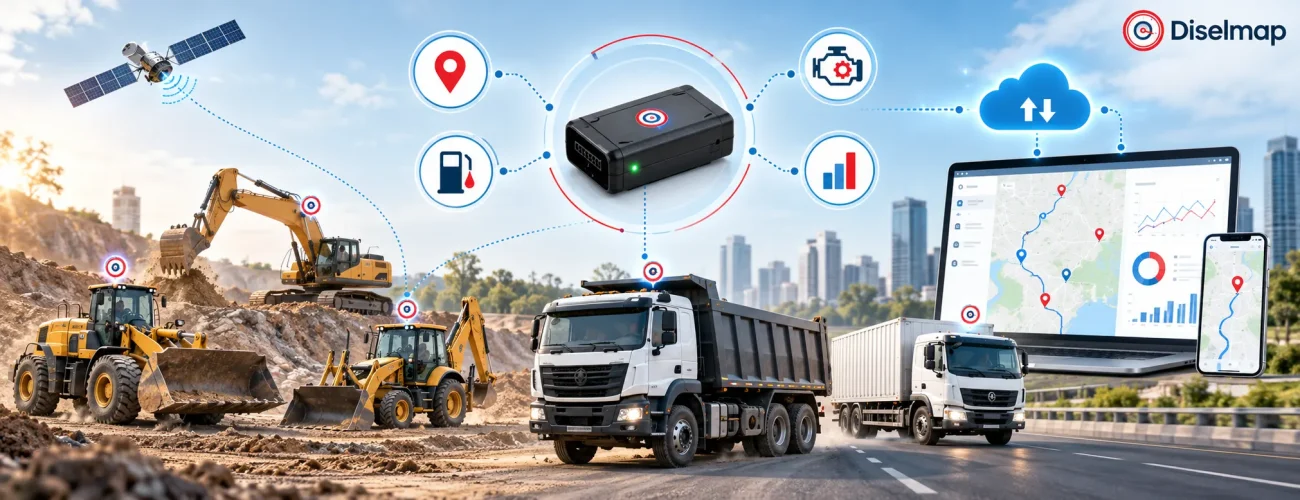
In simple terms, a telematics device connects the vehicle with fleet software.It can collect GPS location, ignition status, speed, engine hours, selected vehicle data and information from compatible sensors. The data is then sent to a cloud platform where fleet managers can view maps, reports, alerts and vehicle history.This guide explains what a telematics device is, how it works, what data it can collect and how it supports fleet management in simple language.
What Is a Telematics Device?
A telematics device is electronic hardware installed in or connected to a vehicle.
Its main job is to collect selected vehicle information and send it to a remote software platform.
Depending on the vehicle and installation, it may collect data such as:
- Vehicle location
- Speed
- Ignition status
- Distance travelled
- Trip history
- Engine hours
- Idling
- Driver behaviour events
- CAN Bus data
- Fuel information
- Sensor data
The telematics device acts as the connection between the vehicle and the fleet management software.
A simple way to understand it is:
Vehicle → Telematics Device → Mobile Network → Cloud Platform → Fleet Manager
The device collects the data.
The platform makes the data useful.
How Does a Telematics Device Work?
A telematics device usually works in four main steps.
1. It Tracks the Vehicle Location
Most telematics devices include GPS or another satellite positioning system.
This helps identify:
- Current location
- Vehicle movement
- Route travelled
- Speed
- Stops
- Distance travelled
This location data forms the base of most fleet tracking systems.
2. It Collects Vehicle Information
The device may also connect to the vehicle itself.
Depending on the setup, it can receive information from:
- Ignition
- CAN Bus
- OBD interface
- Digital inputs
- Analogue inputs
- Fuel sensors
- Temperature sensors
- Other compatible devices
This allows the system to collect more than just GPS location.
3. It Sends Data to the Cloud
The device sends vehicle data through a mobile network or another supported communication system.
Data may be sent:
- At regular intervals
- When the vehicle starts
- When the vehicle stops
- When a specific event occurs
- When an alert condition is detected
This allows fleet managers to access vehicle information remotely.
4. Fleet Software Displays the Information
Once the data reaches the cloud platform, the software organizes it into useful information.
Fleet managers can then view:
- Live vehicle locations
- Trip history
- Vehicle activity
- Driver events
- Alerts
- Reports
- Engine hours
- Fuel trends
- Utilization data
This is what turns raw vehicle data into useful fleet information.
Main Components of a Telematics Device
A telematics device may contain several important components.
GPS or GNSS Receiver
This component identifies the vehicle’s position.
It supports:
- Live tracking
- Route history
- Speed
- Stops
- Distance
Communication Module
This allows the device to send information to the remote platform.
Cellular connectivity is commonly used.
Processor
The processor manages the information collected from GPS, vehicle inputs and sensors.
It can also help identify events before sending data to the server.
Internal Memory
Some devices can store information temporarily when mobile coverage is unavailable.
The stored data may be uploaded later when connectivity returns.
Motion Sensor
An accelerometer can detect changes in movement.
Depending on the system, it may help identify events such as:
- Harsh braking
- Rapid acceleration
- Sharp cornering
Vehicle Interfaces
Some telematics devices can connect with:
- CAN Bus
- OBD
- Ignition wiring
- Fuel sensors
- External sensors
- Digital and analogue inputs
The available connections depend on the hardware and vehicle.
Telematics Device vs GPS Tracker
A GPS tracker and a telematics device are related, but they are not always the same.
| Feature | GPS Tracker | Telematics Device |
|---|---|---|
| Vehicle location | Yes | Yes |
| Route history | Yes | Yes |
| Geofencing | Usually | Usually |
| Speed monitoring | Yes | Yes |
| Driver behaviour | Limited | Can be supported |
| Engine hours | Limited | Can be supported |
| CAN Bus integration | Usually limited | Possible |
| Fuel sensor integration | Limited | Possible |
| Vehicle diagnostics | Limited | Can be supported |
| Fleet analytics | Basic | More detailed |
A GPS tracker mainly answers:
Where is the vehicle?
A telematics device can help answer:
Where is the vehicle, how is it operating, and what other vehicle information is available?
This is the main difference.
What Data Can a Telematics Device Collect?
The exact data depends on the vehicle, device and integration.
| Data Type | What It Helps Fleet Managers Understand |
|---|---|
| GPS location | Where the vehicle is |
| Route history | Where the vehicle travelled |
| Speed | How fast the vehicle was moving |
| Ignition status | Whether the vehicle was operating |
| Engine hours | How long the engine was running |
| Idling | Time spent stationary with the engine running |
| Driver events | Harsh braking, acceleration or overspeeding |
| CAN Bus data | Selected vehicle operating information |
| Fuel data | Fuel level or fuel activity when integrated |
| Sensor data | Additional operational conditions |
The goal is not to collect every possible data point.
The goal is to collect information that helps the fleet manager make better decisions.
How Telematics Devices Help Fleet Management
Telematics devices support several important fleet management activities.
Real-Time Vehicle Tracking
Fleet managers can see vehicle locations from a centralized dashboard.
This helps reduce the need for repeated phone calls to drivers just to understand where vehicles are.
It also helps operations teams coordinate vehicles across multiple locations.
Trip Monitoring
Telematics systems can record trip information.
This may include:
- Starting location
- Ending location
- Distance travelled
- Stops
- Route taken
- Travel time
Trip history helps fleet teams understand how vehicles are actually being used.
Route Monitoring
Fleet managers can compare actual vehicle movement with expected routes.
This can help identify:
- Route deviation
- Unplanned stops
- Delays
- Unusual vehicle movement
Route monitoring is especially useful for logistics and transport fleets.
Geofencing
A geofence is a virtual boundary around a location.
Fleet managers can create geofences around places such as:
- Depots
- Warehouses
- Customer locations
- Construction sites
- Fuel stations
- Restricted areas
The system can record when a vehicle enters or leaves that area.
Driver Behaviour Monitoring
Depending on the telematics setup, the system may identify events such as:
- Overspeeding
- Harsh braking
- Rapid acceleration
- Sharp cornering
- Excessive idling
These events can help fleet managers identify driving patterns that may require attention or coaching.
Engine Hour Monitoring
Engine hours are particularly useful for heavy equipment.
Construction machines may operate for many hours without travelling long distances.
For example, an excavator may remain inside one construction site all day.
Mileage may be low, but engine hours may be high.
This makes engine hours useful for:
- Utilization tracking
- Service planning
- Maintenance scheduling
Fuel Monitoring Integration
A telematics device can work with compatible fuel monitoring hardware.
Depending on the installation, the system may help track:
- Fuel level
- Refuelling activity
- Sudden fuel drops
- Fuel usage trends
Fuel monitoring is especially useful for diesel-intensive fleets.
Vehicle Health Monitoring
On compatible vehicles, telematics can collect selected vehicle data.
This may help fleet managers monitor operating information and support maintenance planning.
The amount of vehicle information available depends on the vehicle and integration.
How Telematics Works with CAN Bus
CAN Bus is a communication system used inside many modern vehicles.
Different vehicle control units exchange information through the CAN network.
When a telematics device is compatible with the vehicle, it may read selected CAN Bus data.
Depending on the vehicle, this may include information related to:
- Engine operation
- Vehicle speed
- Engine hours
- Fuel-related parameters
- Diagnostic information
- Electrical system information
However, CAN Bus data is not the same for every vehicle.
Different manufacturers and models may provide different parameters.
Fleet operators should therefore confirm vehicle compatibility before expecting specific data.
Telematics Devices for Commercial Vehicles
Telematics devices are commonly used in commercial fleets.
They can be installed in vehicles such as:
- Trucks
- Tippers
- Buses
- Tankers
- Delivery vehicles
- Service vehicles
- Utility vehicles
Commercial fleets can use telematics for:
- Vehicle tracking
- Route monitoring
- Driver activity
- Trip history
- Vehicle utilization
- Fuel monitoring
- Fleet reporting
The exact setup depends on the fleet’s operational requirements.
Telematics Devices for Construction Equipment
Telematics is also useful for construction fleets.
Construction equipment may include:
- Excavators
- Backhoe loaders
- Wheel loaders
- Tipper trucks
- Concrete mixers
- Road rollers
- Cranes
These machines operate differently from normal road vehicles.
For construction fleets, useful information may include:
- Equipment location
- Engine hours
- Operating time
- Idle time
- Fuel activity
- Movement between sites
- Utilization
For example, knowing that an excavator is located at a project site is useful.
But knowing that it operated for only three hours during an eight-hour shift gives the fleet manager much more useful information.
Telematics Devices for Mining Fleets
Mining operations often use large fleets of heavy equipment.
Fleet managers may need to monitor:
- Vehicle location
- Equipment operating hours
- Utilization
- Fuel activity
- Movement inside operational zones
- Maintenance intervals
Telematics can help central teams monitor multiple assets from one platform.
This is useful when equipment is spread across large or remote sites.
Telematics Devices for Oil and Gas Fleets
Oil and gas fleets may operate vehicles across remote sites and long-distance routes.
Telematics can help monitor:
- Vehicle movement
- Field activity
- Route history
- Driver activity
- Engine hours
- Fuel behaviour
- Vehicle utilization
The technology does not replace operational procedures.
It provides an additional data layer that can improve visibility.
Telematics Hardware vs Telematics Software
Fleet managers should understand the difference between hardware and software.
Telematics Hardware
The hardware is installed in the vehicle.
It:
- Collects data
- Reads vehicle information
- Detects events
- Connects to sensors
- Sends data
Telematics Software
The software receives and displays the information.
It provides:
- Maps
- Reports
- Dashboards
- Alerts
- Historical data
- Fleet analytics
A simple way to remember the difference is:
Hardware collects the data.
Software makes the data useful.
Both are important parts of a complete fleet telematics system.
What Should Fleet Managers Look for in a Telematics Device?
Choosing a telematics device should start with the fleet’s actual needs.
Vehicle Compatibility
Check whether the device supports your vehicle types.
A mixed fleet may include:
- Trucks
- Buses
- Construction equipment
- Older vehicles
- Newer CAN-enabled vehicles
The same installation may not suit every vehicle.
Data Requirements
Decide what information you actually need.
For example:
- GPS location
- Engine hours
- Driver behaviour
- Fuel monitoring
- CAN Bus data
- Vehicle diagnostics
This helps avoid unnecessary complexity.
Sensor Compatibility
If you need fuel or other sensor-based monitoring, check whether the telematics device can connect to the required hardware.
Network Connectivity
Vehicles may operate in areas with different levels of mobile coverage.
The device should be suitable for the actual operating environment.
Installation Method
Some devices connect through a diagnostic port.
Others require professional hardwired installation.
Heavy equipment or fuel monitoring may require additional wiring and sensor integration.
Software Platform
The hardware is only one part of the system.
Fleet managers should also check whether the software provides:
- Clear dashboards
- Useful reports
- Relevant alerts
- Vehicle history
- Easy fleet monitoring
Scalability
A telematics system should be able to support fleet growth.
A business may start with 20 vehicles and later expand to 100 or more.
The system should remain manageable as the fleet grows.
How Is a Telematics Device Installed?
The installation method depends on the vehicle and device.
Common approaches include:
- Hardwired installation
- Diagnostic-port connection
- CAN Bus connection
- OEM interface connection
- External sensor integration
After installation, the device is usually linked to the correct vehicle inside the fleet management platform.
The system should then be tested to confirm that the required information is being received correctly.
What Happens After Installation?
Installing the hardware is only the first step.
Fleet teams should configure the platform around actual business needs.
Typical steps include:
- Add the vehicle to the platform.
- Confirm GPS communication.
- Check ignition data.
- Configure vehicle details.
- Add geofences if needed.
- Set useful alerts.
- Connect supported sensors.
- Verify vehicle data.
- Create reports.
- Decide which fleet metrics will be reviewed regularly.
The objective should be simple:
Collect useful data, not unnecessary data.
Common Mistakes Fleet Managers Should Avoid
Telematics can provide a lot of information, but poor configuration can reduce its value.
Tracking Too Many Metrics
More data does not always mean better fleet management.
Focus on information that supports clear business goals.
Creating Too Many Alerts
If fleet managers receive constant notifications, important alerts may be ignored.
Only create alerts for events that require attention.
Ignoring Historical Data
Real-time information is useful.
Historical data is equally important.
It can help identify patterns across:
- Vehicles
- Drivers
- Routes
- Fuel usage
- Engine hours
- Utilization
Using the Same Setup for Every Vehicle
A city delivery van and an excavator operate very differently.
The telematics setup should match the vehicle’s actual job.
Choosing Hardware Before Defining Requirements
Do not start with:
Which device has the most features?
Start with:
What information does our fleet need?
Then choose the hardware.
How Telematics Data Helps Fleet Managers Make Better Decisions
Telematics is useful because it adds context to vehicle activity.
Consider a truck that has been stopped for 30 minutes.
A basic GPS system tells the fleet manager:
The truck is at this location.
A broader telematics system may also show:
- Ignition is on
- Engine is running
- The vehicle has been idling for 30 minutes
- The stop is outside the planned route
- Fuel continues to be consumed
This gives the fleet manager more useful information.
That is the real purpose of fleet telematics.
It turns vehicle activity into information that can support operational decisions.
How Diselmap Supports Fleet Telematics
Diselmap helps businesses connect vehicles and operational information through integrated fleet technology.
Depending on fleet requirements and compatible hardware, Diselmap solutions can support:
- GPS tracking
- Fleet telematics
- Vehicle monitoring
- Driver behaviour monitoring
- Fuel monitoring
- CAN Bus monitoring
- Fleet analytics
- Maintenance visibility
The aim is to help fleet teams move beyond basic vehicle location and gain a clearer view of how vehicles and equipment are operating.
Frequently Asked Questions
What is a telematics device?
A telematics device is electronic hardware installed in or connected to a vehicle. It collects selected location and vehicle data and sends that information to fleet management software.
What does a telematics device track?
A telematics device is electronic hardware installed in or connected to a vehicle. It collects selected location and vehicle data and sends that information to fleet management software.
Is a telematics device the same as a GPS tracker?
No. GPS tracking mainly focuses on vehicle location and movement. A telematics device can also collect additional vehicle and sensor information.
What is fleet telematics?
Fleet telematics uses connected vehicle hardware, communication technology and software to monitor fleet activity remotely.
What is vehicle telematics?
Vehicle telematics refers to technology that collects and transmits vehicle information to a remote platform.
Can telematics monitor fuel?
Yes, when compatible fuel sensors or supported vehicle data are connected to the telematics system.
Can telematics devices monitor driver behaviour?
Depending on the system, telematics can help identify events such as overspeeding, harsh braking, rapid acceleration and excessive idling.
Can telematics help with maintenance?
Yes. Mileage, engine hours and supported vehicle data can help fleet teams plan preventive maintenance.
Does a telematics device need mobile connectivity?
Most connected telematics systems use mobile networks to send information to cloud platforms. Some devices can store data temporarily when coverage is unavailable.
Conclusion
A telematics device connects a vehicle with a digital fleet management platform.
It can combine GPS location, vehicle information, sensors and communication technology to help fleet managers understand what is happening across their vehicles and equipment.
For commercial fleets, construction operations, mining fleets and other mobile assets, telematics can provide useful visibility into vehicle movement, engine hours, driver activity, fuel information and utilization.
The most important point is not how much data the device can collect.
The important point is whether that information helps fleet managers identify problems, understand operating patterns and make better decisions.
Connect Your Fleet with Diselmap Telematics
Diselmap provides connected fleet technology for businesses that want better visibility across commercial vehicles and equipment.
From GPS tracking and fleet telematics to fuel monitoring, driver behaviour monitoring, CAN Bus data and fleet analytics, Diselmap can help build a monitoring setup around your fleet’s actual requirements.
Explore Diselmap Telematics Solutions or contact the Diselmap team to discuss your fleet requirements.